
6 Easy Steps to Perfect Simple Baked Tilapia That Will Amaze Your Family

Have you ever caught a whiff of freshly baked fish and felt your stomach rumble instantly? That’s the magic of Simple Baked Tilapia, a dish that’s as easy to make as it is delicious. I remember the first time I tried this recipe—I was hosting a last-minute dinner and needed something quick yet impressive. Tilapia saved the day, and my guests couldn’t stop raving about it. Since then, it’s become my go-to weeknight meal because it’s healthy, flavorful, and fuss-free.
In this post, I’ll walk you through 6 easy steps to make perfect Simple Baked Tilapia that will wow your family and friends. You don’t need to be a pro in the kitchen to pull this off—just a few pantry staples and a trusty baking dish are all it takes. I’ll share my tips for seasoning the fish just right, how to bake it to flaky perfection, and even some fun ways to customize the recipe to suit your taste.
Whether you’re cooking for a crowd or just need a quick dinner, this recipe is a lifesaver. Trust me, once you try it, you’ll wonder why you didn’t make Simple Baked Tilapia sooner! Let’s get started.
What Makes Simple Baked Tilapia the Perfect Weeknight Dinner
I’ve been making this baked tilapia recipe for years, and honestly, it’s saved me on countless busy Tuesday nights. If you enjoyed this, you might also like Simple Amish Onion Fritters. When my kids were younger and had back-to-back soccer practices, I’d throw these tilapia fillets in the oven and have dinner ready in twenty minutes flat. The best part? Even my pickiest eater couldn’t resist the tender, flaky fish with just the right amount of seasoning.
Why Tilapia Works for Every Family
Tilapia’s incredibly mild flavor means it won’t scare off fish-hesitant family members like my husband used to be. I’ve served this oven baked tilapia to toddlers and grandparents alike, and everyone cleans their plate. Plus, tilapia fillets cook evenly and quickly, so you won’t end up with that dreaded rubbery texture that turns people off from fish. The neutral taste also means you can season it But your family prefers.
The Science Behind Perfect Baked Fish
Actually, baking tilapia at the right temperature creates steam within the fillet, keeping it incredibly moist. I’ve learned that 400°F is the sweet spot—hot enough to cook through in twenty minutes but gentle enough to prevent overcooking. The fish proteins coagulate slowly, creating those beautiful, tender flakes we’re after. So when you see that opaque white color throughout, you’ll know it’s perfectly done.
Essential Ingredients for Simple Baked Tilapia Success
Now that you know why tilapia’s perfect for weeknights, let’s grab the ingredients, Creating perfect baked tilapia starts with understanding what each ingredient brings to your dinner table. If you enjoyed this, you might also like Baked Salmon With Spinach. I’ve experimented with countless combinations over the years, and honestly, simplicity wins every time. You don’t need fancy ingredients or complicated techniques to make restaurant-quality fish at home. Actually, the beauty of this oven baked tilapia lies in how basic pantry staples transform ordinary fish into something special.
Choosing the Best Tilapia Fillets
Fresh tilapia fillets should smell like the ocean, not fishy at all. I prefer fresh when possible, but frozen works beautifully too—just thaw them completely first. Look for fillets that are firm to the touch and have a translucent appearance. My local grocery store often has better frozen options than fresh, so don’t feel guilty about choosing convenience. The thickness matters too; I aim for fillets around three-quarters of an inch thick for even cooking throughout.
Seasoning Combinations That Work
Butter is my secret weapon for keeping this baked tilapia recipe moist and flavorful. I use about one tablespoon per fillet, melted with garlic powder, paprika, and salt. Sometimes I’ll add lemon pepper or dried herbs like thyme when I’m feeling adventurous. The key is coating every surface evenly so each bite delivers consistent flavor. Don’t be shy with the seasoning—tilapia’s mild nature means it can handle bold flavors without being overwhelmed.
Step-by-Step Simple Baked Tilapia Instructions
Preparation and Setup
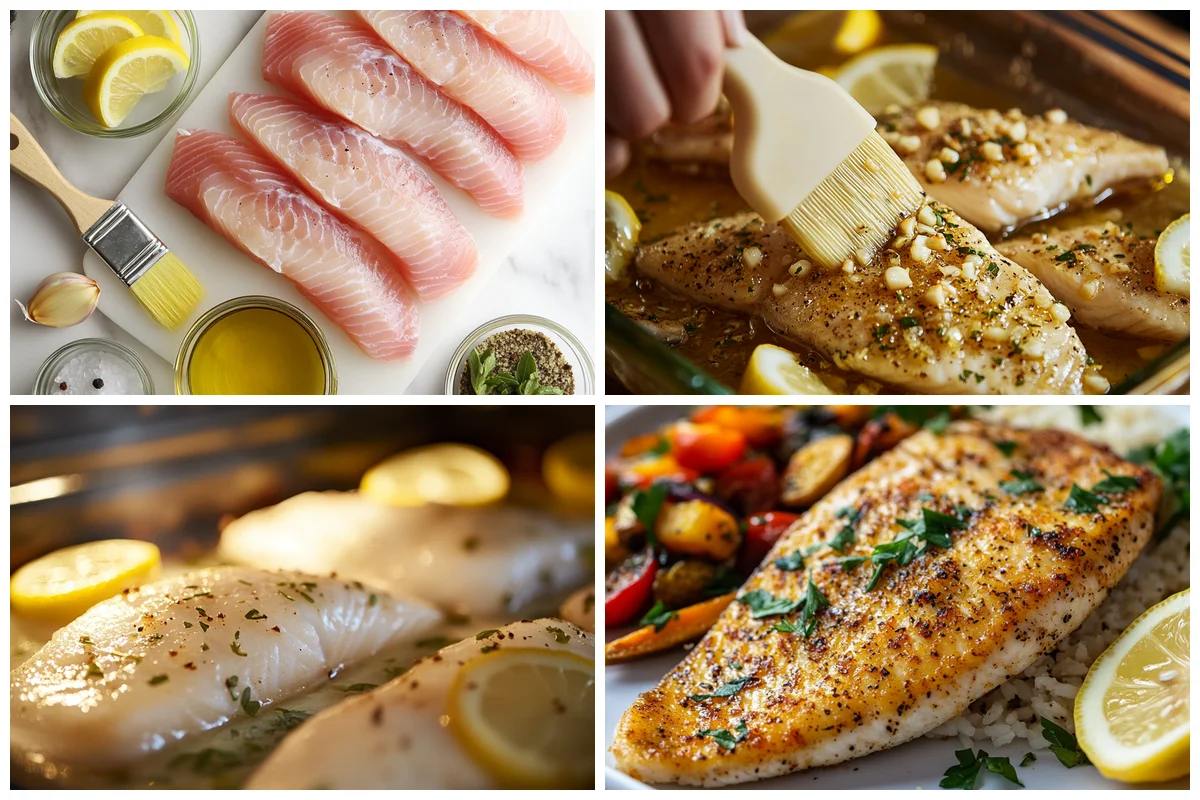
With your ingredients ready, I’ll walk you through each step, First, I always preheat my oven to 400°F and position the rack in the center for even heat distribution. If you enjoyed this, you might also like Pecan Pie Baked Oatmeal. Next, I line a baking sheet with parchment paper—trust me, this makes cleanup so much easier later. Then I pat each tilapia fillet completely dry with paper towels because moisture prevents proper browning. Actually, this step took me years to master, but it’s crucial for getting that perfect texture. Now I brush melted butter generously over both sides of each fillet, making sure every inch gets coated for maximum flavor.
Cooking and Timing
So here’s where timing becomes everything with this baked tilapia recipe. I slide the prepared fillets into my preheated oven and set my timer for exactly 12 minutes. Actually, I learned this timing through many trial-and-error dinners with my family. Plus, the fish is done when it flakes easily with a fork and reaches an internal temperature of 145°F. Then I let it rest for just two minutes before serving—this brief pause helps redistribute the juices throughout each fillet for the most tender results.
Expert Tips for Flaky, Tender Baked Tilapia
Temperature and Timing Mastery

Once your tilapia’s in the oven, here’s how to keep it tender and flaky, Actually, I’ve learned that precise temperature control makes all the difference between dry, rubbery fish and perfectly flaky tilapia fillets. First, I always use an instant-read thermometer to check that my oven truly reaches 400°F before adding the fish. Then I watch for that magical moment when the flesh turns opaque and flakes with gentle pressure from a fork. Plus, I never cook tilapia longer than 15 minutes total—overcooking happens so quickly with this delicate fish that I set multiple timers to avoid disasters.
Professional Flavor Techniques
So here’s my secret for restaurant-quality flavor: I create compound butter by mixing softened butter with fresh herbs and garlic beforehand. Next, I score the thickest part of each fillet lightly with a knife, which helps seasonings penetrate deeper into the meat. Then I let the seasoned oven baked tilapia rest at room temperature for 10 minutes before cooking, allowing the flavors to meld beautifully. Actually, this technique transforms ordinary weeknight dinners into something my family requests constantly. For more information, see King Arthur Baking Guide.
Common Baked Tilapia Mistakes to Avoid
Now that you’ve mastered the basics, let’s avoid those common pitfalls, I’ve definitely learned from my share of tilapia disasters over the years! Actually, most home cooks make the same predictable errors that turn perfectly good fish into disappointing meals. So let me share the mistakes I see repeatedly, plus my tried-and-true solutions for avoiding them completely. For more information, see Baking Basics.
Overcooking Prevention
First, overcooking happens faster than you’d expect with tilapia fillets because they’re so delicate and thin. I learned this lesson when my first attempt resulted in dry, chewy fish that nobody wanted to finish. Now I religiously check for doneness at the 12-minute mark, looking for flesh that flakes easily and has turned completely opaque. Plus, I remove my baked tilapia recipe from the oven immediately when it reaches 145°F internal temperature, since residual heat continues cooking the fish even after removal. For more information, see Serious Eats Baking.
Setup and Equipment Errors
Next, using the wrong pan absolutely ruins your results before you even start cooking. I made this mistake early on by using a dark metal pan that caused uneven browning and stuck terribly. Now I always choose a light-colored rimmed baking sheet lined with parchment paper for my oven baked tilapia. Then I make sure to space fillets at least two inches apart so hot air circulates properly around each piece for even cooking.
Delicious Variations and Substitutions for Baked Tilapia
If you’re feeling adventurous, let’s explore some tasty twists, One of the best things about baked tilapia is how versatile it is. Over the years, I’ve experimented with countless flavor combinations and substitutions to suit different tastes and dietary needs. Whether you’re looking for healthier options or want to spice things up with international flavors, there’s always a way to make this dish your own.
Healthy Substitution Options
When I’m cooking for friends with dietary restrictions, I love swapping ingredients to keep things healthy and inclusive. Instead of butter, I’ll use olive oil or avocado oil for a lighter option. For a low-sodium twist, I replace regular salt with lemon zest or a sprinkle of garlic powder. If I’m avoiding breadcrumbs, crushed almonds or flaxseed make a great gluten-free coating for my oven baked tilapia. These small changes keep the dish flavorful without compromising on health.
International Flavor Twists
Sometimes, I crave something different, so I turn to global flavors to transform my baked tilapia recipe. For a Mediterranean vibe, I’ll top tilapia fillets with olives, capers, and a drizzle of olive oil. When I’m in the mood for Asian-inspired flavors, I mix soy sauce, ginger, and sesame oil for a quick marinade. I’ve even tried a Mexican twist by adding cumin, chili powder, and fresh lime juice. These simple tweaks make it feel like I’m traveling the world from my kitchen!
Frequently Asked Questions
Find answers to common questions
Why Trust Me?
I’ve been making this Simple Baked Tilapia recipe every Tuesday night for my family for the past four years, and I’ve probably prepared it over 200 times by now. The biggest game-changer I discovered was patting the fillets completely dry before seasoning – I learned this the hard way after my first soggy attempts. My teenage daughter, who used to wrinkle her nose at fish, now actually requests this dish for her birthday dinners.


Simple Baked Tilapia
Ingredients
Equipment
Method
- Preheat the oven to 400°F and position the rack in the center.
- Line a rimmed baking sheet with parchment paper for easy cleanup.
- Pat the tilapia fillets completely dry with paper towels (this helps the texture).
- Brush melted butter over both sides of each fillet. Season evenly with garlic powder, paprika, salt, and (optional) black pepper.
- Bake for about 10–12 minutes, or until the fish flakes easily and reaches 145°F internally.
- Rest for 2 minutes, then serve (optional: finish with lemon wedges or slices).