
7 Simple Ways to Make Incredible Mongolian Beef

I’ll never forget the first time I tried Mongolian Beef at my favorite Chinese restaurant. The tender slices of beef coated in that glossy, sweet-savory sauce had me hooked from the first bite. After begging the waiter for hints about their secret recipe (he wouldn’t budge), I spent months recreating it at home. Now I’m sharing everything I’ve learned so you can skip the trial and error phase. Whether you’re craving takeout flavors or want to impress dinner guests, these 7 simple methods will transform your Mongolian Beef game.
Key Takeaways:
- Use flank steak for perfect tenderness
- The sauce needs equal parts sweet and savory
- Cornstarch is your secret weapon
- High heat creates that restaurant-quality sear
- Letting it rest makes all the difference
Why Mongolian Beef Matters
Mongolian Beef might sound like it comes straight from the Mongolian steppes, but it’s actually an American-Chinese restaurant creation. If you enjoyed this, you might also like Mongolian Ground Beef Noodles Quick Easy Asian Dinner. This dish features thin slices of beef stir-fried with green onions in a rich, slightly sweet brown sauce. What makes it special is how the sauce clings to every piece of meat, creating that irresistible glossy coating. I love how the beef stays juicy while getting beautifully caramelized edges.
Origins and History
Here’s something funny – despite the name, Mongolian Beef has zero connection to actual Mongolian cuisine. It was invented by Chinese immigrants in America during the mid-20th century. The name was likely chosen because it sounded exotic and appealing to Western customers. My Taiwanese friend laughed when I asked her about it – she said they’d never heard of this dish until moving to the States. The flavors actually resemble northern Chinese cooking more than anything from Mongolia.
What Is Mongolian Beef?
In my book, Mongolian Beef deserves a spot in every home cook’s rotation because it’s shockingly easy yet impressive. If you enjoyed this, you might also like Taco Ground Beef Rice Bowl. It’s become my go-to dish when I need something quick but special – like when my in-laws surprise us with a visit. The combination of tender beef and that addictive sauce makes it universally loved. Plus, it’s versatile enough to pair with rice, noodles, or even stuffed into lettuce wraps.
Flavor Appeal
What keeps me making Mongolian Beef week after week is that perfect balance of flavors. The soy sauce brings umami depth, brown sugar adds caramel sweetness, and garlic gives it that aromatic punch. Then there’s the subtle heat from red pepper flakes – just enough to make things interesting without overwhelming. My kids always say it tastes like “fancy candy meat” because of how the sauce caramelizes.
Essential Ingredients for Mongolian Beef
After testing countless versions, I’ve nailed down exactly what you need for authentic Mongolian Beef. If you enjoyed this, you might also like High Protein Ground Beef Veggie Bowl. The star is definitely flank steak – its grain makes it perfect for slicing against the fibers. You’ll also need basic Asian pantry staples like soy sauce, brown sugar, and cornstarch. Don’t skip the fresh garlic and ginger – they make all the difference between good and great.

Key Ingredients
Let me share my must-have list:
- Flank steak (1.5 lbs for 4 servings)
- Cornstarch (for velveting the beef)
- Soy sauce (I use half light, half dark)
- Brown sugar (packed for that caramel flavor)
- Fresh garlic and ginger (minced fine)
- Green onions (for color and freshness)
- Vegetable oil (high smoke point for searing)
Step-by-Step Guide to Making Mongolian Beef
Here’s how I make Mongolian Beef every Friday night – it’s become our family tradition. First, I slice the flank steak against the grain into thin strips, then toss it with cornstarch. While that sits, I whisk together the sauce ingredients. The magic happens when you sear the beef in screaming hot oil – that’s when you get those crispy edges. Finally, everything comes together in the pan with the sauce thickening to perfection.

Cooking Process
Now let’s get into the details. Heat your wok or skillet until it’s nearly smoking – this prevents sticking. Cook the beef in batches so it browns instead of steams. Remove the beef, then sauté the garlic and ginger until fragrant. Pour in the sauce and let it bubble until slightly reduced
Expert Tips and Common Mistakes When Making Mongolian Beef
After making this dish countless times over the years, I’ve learned that Mongolian beef can be absolutely spectacular or completely disappointing depending on a few key techniques. The difference between restaurant-quality results and a soggy mess often comes down to understanding these crucial details that most home cooks overlook.

First, let me share the biggest mistake I see people make – they don’t get their oil hot enough before adding the beef. You want that oil shimmering and almost smoking when you drop in your first piece of meat. I learned this lesson the hard way during my early cooking days when I’d add beef to lukewarm oil and end up with gray, steamed meat instead of the beautiful golden-brown sear we’re after. The sizzle should be immediate and aggressive when the beef hits the pan.
Next, resist the urge to overcrowd your pan, even if you’re in a hurry. I know it’s tempting to dump all the beef in at once, but you’ll create steam instead of achieving that perfect crispy exterior. Work in small batches, giving each piece plenty of space to breathe. Actually, I’ve found that cooking in three or four smaller batches produces infinitely better results than trying to rush through in two large ones.
Temperature control becomes absolutely critical when you’re working with the sauce. Many home cooks crank the heat too high and watch helplessly as their beautiful sauce burns or becomes bitter. I keep my heat at medium-high for the beef, then reduce to medium-low when I add the sauce mixture. This gives you much better control and prevents that awful burnt taste that can ruin the entire dish.
The cornstarch coating technique deserves special attention because it’s where many people stumble. You want each piece of beef completely coated but not clumpy or thick. I shake off excess cornstarch before frying, and here’s a trick I learned from a Chinese cooking class – let the coated beef sit for about five minutes before cooking. This allows the cornstarch to absorb moisture from the meat, creating an even better crust. For more information, see Mongolian Beef Recipe.
Timing your green onions correctly makes a huge difference in the final presentation and flavor. Don’t add them too early or they’ll wilt and lose their vibrant color. I add the white parts with the sauce for a minute of cooking, then toss in the green tops right at the very end. They should still have some bite and that beautiful bright green color when you serve the dish. For more information, see Mongolian Beef.
Also, pay attention to your beef slicing technique because it dramatically affects the texture. Cut against the grain in thin strips, about quarter-inch thick. I discovered that partially freezing the beef for thirty minutes makes slicing much easier and more consistent. Plus, when you cut against those muscle fibers, each bite becomes incredibly tender instead of chewy. For more information, see Mongolian Beef Recipe.
One mistake I made for years was using the wrong type of soy sauce. Regular soy sauce works fine, but using a combination of light and dark soy sauce creates much better flavor depth. The light soy sauce provides saltiness while the dark soy sauce adds that rich, caramelized color and slightly sweet undertone that makes restaurant Mongolian beef so appealing.
Ingredient Selection and Smart Substitutions
Choosing the right ingredients can make or break your Mongolian beef, and I’ve experimented with countless variations over the years to find what works best. Let me walk you through the key selections that will elevate your dish from good to absolutely incredible.
For the beef, I always recommend flank steak as your first choice because it has the perfect balance of flavor and tenderness when sliced properly. But, I understand that flank steak can be expensive or hard to find in some areas. Actually, I’ve had excellent results using sirloin tip or even top round when sliced very thin against the grain. The key lies in the slicing technique rather than using the most expensive cut.
If you’re working with a tighter budget, don’t overlook chuck roast as an option. I know it sounds unconventional, but when you slice it paper-thin and follow the proper coating and frying technique, it becomes surprisingly tender. Just make sure to trim away any large pieces of fat or gristle before slicing.
When selecting your aromatics, fresh ginger makes an enormous difference compared to ground ginger powder. I always keep fresh ginger root in my freezer because it grates beautifully when frozen and lasts for months. If you absolutely must substitute, use about one-third the amount of ground ginger, but know that you’ll lose some of that bright, zingy flavor that makes this dish so special.
For the sauce components, hoisin sauce serves as the sweet backbone of authentic Mongolian beef. Some recipes skip this ingredient, but I consider it absolutely essential for achieving that characteristic flavor profile. If you can’t find hoisin sauce, you can make a quick substitute by mixing two tablespoons of soy sauce with one tablespoon of peanut butter and one teaspoon of brown sugar. It won’t be exactly the same, but it’ll get you much closer to the authentic taste.
Brown sugar works wonderfully in this recipe, but I’ve also experimented with other sweeteners when I’ve run out. Coconut sugar provides a slightly deeper, more complex sweetness that I actually prefer sometimes. Maple syrup also works well, though you’ll need to reduce the liquid slightly since syrup adds moisture that brown sugar doesn’t.
Rice wine or Shaoxing wine adds incredible depth to the sauce, but I know it’s not always available in regular grocery stores. Dry sherry makes an excellent substitute and is much easier to find. In a pinch, I’ve even used a splash of white wine or rice vinegar, though the flavor profile changes slightly. Never use sweet cooking wines from the grocery store – they contain too much sodium and artificial flavoring.
Your choice of oil matters more than you might think. Peanut oil handles high heat beautifully and adds a subtle nutty flavor that complements the dish perfectly. Vegetable oil or canola oil work well too, but avoid olive oil since it can’t handle the high temperatures you need for proper searing. I learned this lesson early when my olive oil started smoking and gave the entire dish a bitter taste.
For the green onions, try to select bunches with firm white bulbs and bright green tops. I actually use both parts differently – the white portions go in with the sauce for cooking, while the green tops get added at the very end for color and fresh flavor. If you can’t find green onions, regular yellow onions work, though you’ll lose some of the traditional presentation and flavor.
Cornstarch creates that signature crispy coating, but potato starch actually works even better if you can find it. It creates an incredibly light, crispy texture that stays crunchy longer. Arrowroot powder also works as a substitute, though it’s usually more expensive than cornstarch.
Finally, don’t underestimate the importance of using low-sodium soy sauce so you can control the saltiness of your final dish. Regular soy sauce can make the dish too salty, especially when combined with hoisin sauce. I always taste and adjust the seasoning at the end, adding a pinch of salt or a splash more soy sauce as needed to achieve that perfect balance of sweet, salty, and savory flavors that makes Mongolian beef so irresistible.
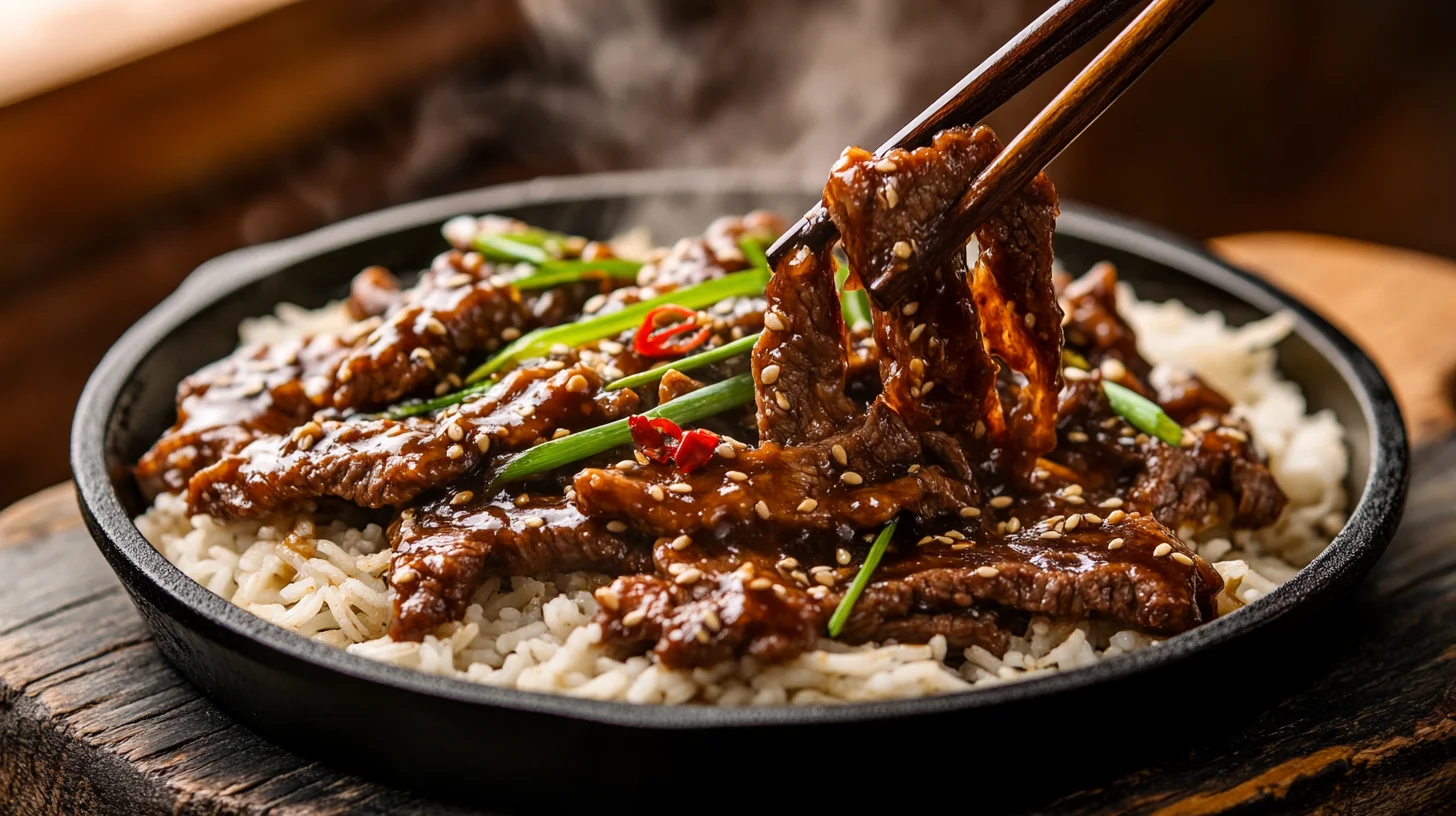
Mongolian Beef
Ingredients
Method
- Step 1: Toss sliced flank steak with cornstarch until fully coated. Let sit for 10 minutes while you prep other ingredients.
- Step 2: In a small bowl, whisk together soy sauce, water, brown sugar, ginger, and red pepper flakes to make the sauce.
- Step 3: Heat 2 tbsp oil in a large wok or skillet over high heat. Add beef in a single layer (work in batches if needed) and cook 1-2 minutes per side until crispy. Remove and set aside.
- Step 4: Reduce heat to medium. Add remaining 1 tbsp oil and sauté garlic for 30 seconds until fragrant.
- Step 5: Pour in the sauce mixture and bring to a simmer. Cook 2-3 minutes until slightly thickened.
- Step 6: Return beef to the pan along with green onions. Toss everything together for 1 minute until well coated and heated through.
- Step 7: Serve immediately over steamed rice.
Notes