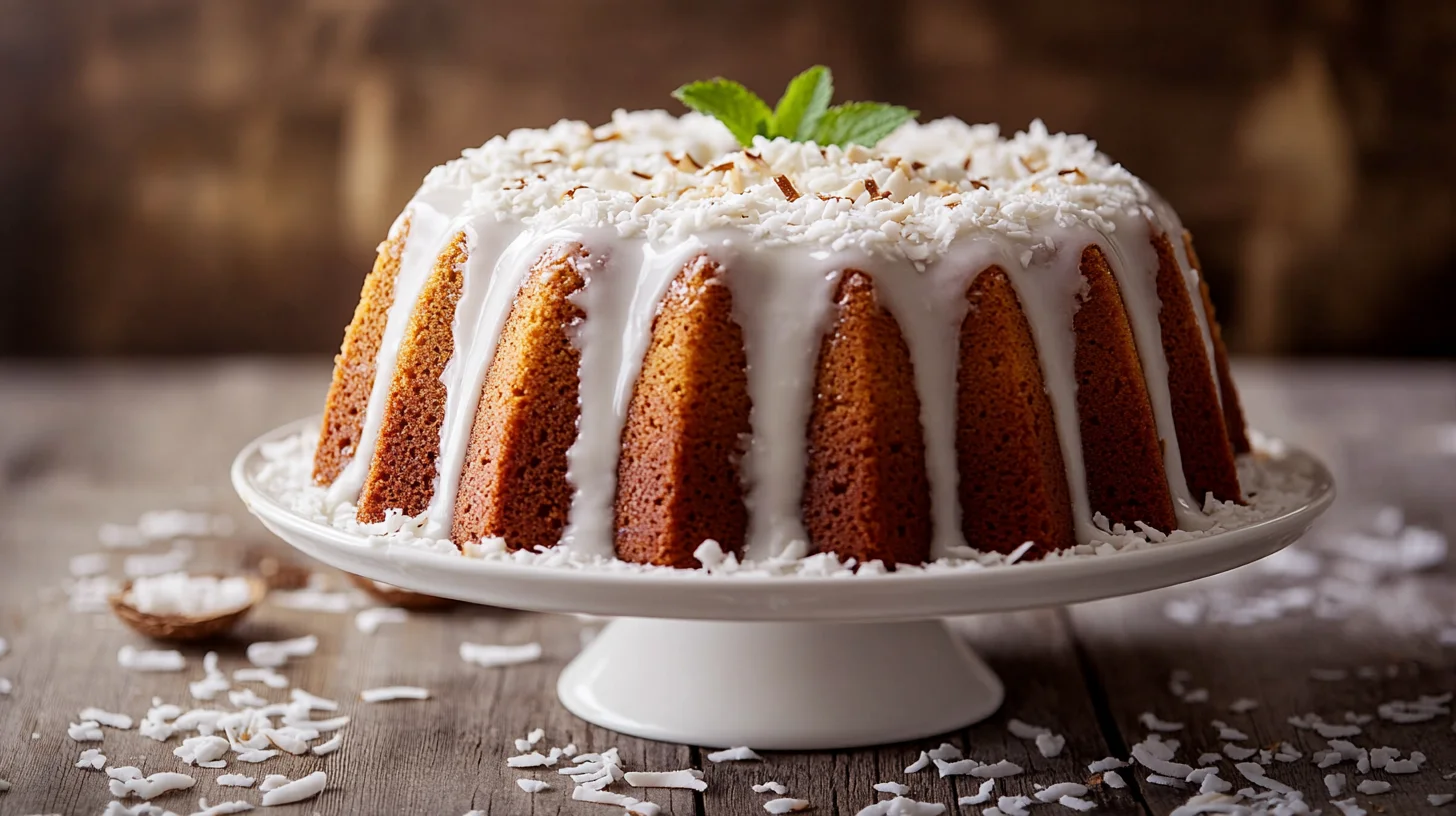
5 Easy Steps to Make the Ultimate Coconut Bundt Cake

The moment you slice into a Coconut Bundt Cake, the rich aroma of toasted coconut and vanilla fills the air, promising something truly special. I’ll never forget the first time I made this cake for my family—my mom’s eyes lit up with every bite, and my dad immediately asked for seconds. It’s been a staple in my kitchen ever since, and I’m thrilled to share it with you.
This cake is moist, tender, and bursting with coconut flavor, thanks to a few simple tricks I’ve picked up over the years. Whether you’re a baking novice or a seasoned pro, you’ll find this recipe approachable and rewarding. Plus, it’s perfect for any occasion—birthdays, holidays, or just because you deserve a slice of something sweet.
In this post, I’ll walk you through 5 easy steps to create the ultimate Coconut Bundt Cake. You’ll learn how to achieve that perfect texture, how to toast coconut for maximum flavor, and even how to make a simple glaze that takes it over the top. I’ve also included tips for avoiding common pitfalls, so you can bake with confidence.
Trust me, once you try this cake, you’ll understand why it’s become a family favorite. So grab your apron, preheat your oven, and let’s get baking!
What Makes Coconut Bundt Cake Special
There’s something absolutely magical about Coconut Bundt Cake that sets it apart from every other dessert I’ve ever made. If you enjoyed this, you might also like Pink Bow Birthday Cake. Actually, I think it’s the way the coconut flavor weaves through every single bite, creating this incredible tropical escape right in your own kitchen. When I first started baking this cake, I had no idea it would become such a conversation starter at every gathering I brought it to.
The beauty of this cake lies in its perfect balance of flavors and textures. You get that rich, buttery cake base infused with coconut at every level – from the batter itself to the toasted coconut that gets folded in. Plus, the bundt pan creates those gorgeous ridges that hold onto the glaze so beautifully. I’ve watched people literally stop mid-conversation when they take their first bite, and honestly, that reaction never gets old.
The Story Behind Coconut Bundt Cake
Now, here’s where things get really interesting. Coconut Bundt Cake actually has quite the celebrity connection that most people don’t know about. Back in the 1990s, Tom Cruise became completely obsessed with a specific coconut bundt cake from Doan’s Bakery in Woodland Hills, California. I’m talking about sending hundreds of these cakes to his co-stars, friends, and colleagues every single holiday season.
The story goes that Tom discovered this particular cake during filming, and it became his signature gift. We’re not talking about a simple cake mix situation here – Doan’s Bakery created something truly special that caught the attention of one of Hollywood’s biggest stars. Actually, Tom would order so many cakes that the bakery had to hire extra staff just to handle his holiday orders. Can you imagine being the baker who suddenly had to produce thousands of coconut bundt cakes because Tom Cruise couldn’t stop raving about them?
What made Doan’s version so incredible was their use of coconut milk in the batter, which created this incredibly moist texture that just melted in your mouth. They also used freshly grated coconut instead of the dried stuff, and they’d toast it to perfection before folding it into the batter. The combination created layers of coconut flavor that hit you at different moments as you ate the cake.
I’ve spent years trying to recreate that same magic in my own kitchen, and I think I’ve finally cracked the code. The secret isn’t just about adding coconut – it’s about building coconut flavor throughout the entire cake. First, you start with coconut milk in the batter, then you add coconut extract for that pure coconut essence, and finally you fold in toasted coconut flakes for texture and even more flavor.
The funny thing is, even though Tom Cruise made this cake famous, coconut bundt cakes have been around much longer than that Hollywood connection. My grandmother used to tell me stories about making similar cakes back in the 1950s, long before anyone knew who Tom Cruise was. She’d use fresh coconut when she could get it, grating it by hand and toasting it in a cast iron skillet until it was golden brown.
Why People Love Coconut Bundt Cake
There’s something about Coconut Bundt Cake that just makes people happy, and I think I’ve figured out why after making this recipe countless times for friends and family. First off, coconut has this amazing ability to transport you somewhere tropical and relaxing, even if you’re eating it in the middle of winter in Ohio. Every time I serve this cake, I watch people’s faces soften as they take that first bite.
The texture is absolutely perfect – it’s incredibly moist thanks to the coconut milk, but it’s not heavy like some other bundt cakes can be. Actually, the coconut milk does double duty here. It keeps the cake tender and adds that subtle coconut flavor that doesn’t hit you over the head. I’ve tried making this cake with regular milk before, and trust me, it’s just not the same.
Then there’s the visual appeal. A bundt cake already looks impressive with those beautiful ridges and curves, but when you add a simple glaze that drips down into all those grooves, it becomes absolutely stunning. I love how the toasted coconut flakes get caught in the glaze, creating these little pockets of texture and flavor throughout each slice.
What really gets me is how this cake brings people together. I’ve brought it to potluck dinners, birthday parties, and holiday gatherings, and it never fails to spark conversations. People want to know what makes it so moist, how I get that coconut flavor so perfectly balanced, and whether I’ll share the recipe. Actually, that’s exactly why I’m sharing it with you today – because good recipes are meant to be passed along.
The best part about loving this cake is how forgiving it is to make. You don’t need any fancy techniques or expensive equipment beyond a good bundt pan. The ingredients are simple and accessible, and the method is straightforward enough that even beginning bakers can nail it on their first try. Plus, it actually gets better after sitting for a day, which means you can make it ahead of time without any stress.
Step-by-Step Guide to Making Coconut Bundt Cake
Now that you’ve seen what makes this cake so incredible, let’s, I’ll never forget the first time I made this Coconut Bundt Cake—it was for my best friend’s birthday, and I was so nervous it wouldn’t turn out right. If you enjoyed this, you might also like Birthday Cake Ninja Creami Ice Cream. But when I pulled that golden, fragrant cake out of the oven, I knew I’d stumbled onto something special. Now, after making it dozens of times (and tweaking the recipe until it’s just right), I can confidently say this is the easiest, most crowd-pleasing cake in my arsenal.

What I love most is how simple the process is. You don’t need to be a professional baker or own a stand mixer—just a good bundt pan, a few bowls, and a little patience. And trust me, the payoff is huge. This cake is moist, packed with coconut flavor, and has that perfect crumb that makes people think you spent hours on it.
Preparing the Batter
First, let’s talk about the batter—the heart of this cake. I’ve tried versions with cake mix (which works in a pinch), but honestly, the from-scratch method is so much better and barely takes more effort. You’ll start by creaming together softened butter and sugar until it’s light and fluffy. I like to use a hand mixer for this, but a sturdy whisk and some elbow grease will do the trick if you’re feeling ambitious.
Next, you’ll add the eggs one at a time, mixing well after each. This is key for getting that smooth, even texture. Then comes the coconut milk—the secret weapon that gives this cake its incredible moisture and tropical flavor. I prefer full-fat coconut milk because it adds richness, but the lighter version works too if that’s what you have on hand.
Now, here’s where things get fun. You’ll alternate adding the dry ingredients (flour, baking powder, and a pinch of salt) with the coconut milk, mixing just until everything is combined. Overmixing is the enemy here—it can make the cake tough. I like to fold in a handful of shredded coconut at the end for extra texture, but that’s totally optional.
One time, I was halfway through making the batter when I realized I was out of vanilla extract. Panic set in until I remembered I had a bottle of coconut extract hiding in the back of my pantry. I swapped it in, and guess what? It made the coconut flavor even more intense. Now I always use a mix of both extracts for the best results.
The batter should be thick but pourable—think pancake batter with a little more body. If it feels too stiff, a splash of extra coconut milk will loosen it up. Then, it’s time to prep your bundt pan. This is crucial: grease every nook and cranny with butter or baking spray, then dust it with flour. I learned this the hard way when my first attempt stuck to the pan like glue. A little extra effort here saves a lot of heartbreak later.
Baking and Cooling the Cake
Once your batter is ready and your pan is prepped, it’s time to bake. Pour the batter into the pan, smooth the top with a spatula, and give it a few taps on the counter to release any air bubbles. Then, into the oven it goes! For more information, see Coconut Bundt Cake.
I bake mine at 350°F for about 50-55 minutes, but ovens can vary, so start checking at the 45-minute mark. The cake is done when a toothpick inserted near the center comes out clean, and the edges are pulling away slightly from the pan. Another trick? The top should spring back when lightly pressed. For more information, see Coconut Bundt Cake Recipe.
Now, here’s the hardest part: letting it cool. I know it’s tempting to dive right in, but patience pays off. Let the cake cool in the pan for 10-15 minutes, then invert it onto a wire rack. If it doesn’t release immediately, don’t panic—just let it sit for another minute or two. Gravity will do its thing. For more information, see Sally’s Baking Addiction.
While the cake cools, I whip up the glaze. A simple mix of powdered sugar, more coconut milk, and a splash of vanilla creates a glossy, sweet coating that seeps into the cake’s crevices. I like to drizzle it while the cake is still slightly warm so it soaks in a little.
For decoration, toasted coconut flakes are a must. They add crunch and a nutty flavor that takes this cake to the next level. I spread them on a baking sheet and toast them in the oven for 5-7 minutes, stirring occasionally, until they’re golden brown. Then, I sprinkle them over the glaze while it’s still wet so they stick.
A funny story: once, I was so distracted by a Tom Cruise movie (hello, Top Gun) that I forgot to set a timer for the coconut flakes. They went from golden to charcoal in what felt like seconds. Lesson learned—always keep an eye on them!
Once the glaze sets (about 30 minutes), the cake is ready to serve. But here’s a pro tip: it tastes even better the next day. The flavors meld, and the texture becomes even more tender. I’ve made this cake the night before parties more times than I can count, and no one ever suspects it wasn’t baked fresh that morning.
So there you have it—my foolproof Coconut Bundt Cake recipe. It’s a showstopper that’s deceptively easy to make, and I guarantee it’ll become a staple in your baking repertoire too.
Expert Tips for Perfect Coconut Bundt Cake
After making this Coconut Bundt Cake countless times over the years, I’ve learned some valuable lessons that’ll save you from the heartbreak of a sunken center or a cake that refuses to come out of the pan. If you enjoyed this, you might also like Valentines Day Chocolate Mug Cake Microwave 5 Minutes. Trust me, I’ve been there, and it’s not pretty. My first attempt at this recipe was for my sister’s birthday party, and let’s just say the cake looked more like a coconut crater than the beautiful ring I’d envisioned. But those mistakes taught me everything I know about perfecting this recipe.

The key to success lies in understanding your ingredients and respecting the process. I’ve discovered that baking is both an art and a science, and with coconut cake, there are specific techniques that make all the difference between a good cake and an absolutely spectacular one. Over the years, I’ve refined my approach based on trial and error, feedback from family and friends, and yes, even a few disasters that taught me what not to do.
Avoiding Common Mistakes
First, let’s talk about the biggest mistake I see people make with Bundt cakes – not properly preparing the pan. I can’t stress this enough: you absolutely must grease every single nook and cranny of that pan. I use a pastry brush with melted butter, making sure to get into all the decorative grooves. Then I dust it with flour, tapping out the excess. Some bakers swear by cake mix release spray, but I prefer the butter method because it creates a more reliable barrier.
Temperature is another critical factor that’ll make or break your cake. I learned this lesson the hard way when I was rushing to get a cake ready for my neighbor’s potluck. I pulled my ingredients straight from the fridge and wondered why my batter looked curdled and strange. Room temperature ingredients are absolutely essential – they blend together smoothly and create that perfect, even texture we’re after. I take my eggs, butter, and coconut milk out about two hours before I start baking.
Overmixing is probably the second most common mistake I’ve witnessed in my kitchen. When my cousin visited last summer, she was so excited to help that she whipped the batter for what felt like ten minutes. The result? A dense, tough cake that was nothing like the tender crumb we were hoping for. Once you add the flour, mix just until you can’t see any white streaks. The batter should look slightly lumpy – that’s perfectly normal and actually what you want.
Don’t skip the cooling time in the pan. I know it’s tempting to flip that beautiful cake out immediately, especially when you’re excited to see how it turned out. But patience is key here. I let my cake cool in the pan for exactly 15 minutes – not more, not less. If you wait too long, the cake might stick, but if you’re too eager, it could break apart. I learned this timing through lots of practice and a few heartbreaking moments watching cake pieces crumble.
Another mistake I’ve made is opening the oven door too early. I remember watching a Tom Cruise movie while my cake was baking, and during an intense scene, I got curious about how the cake was progressing. Opening that oven door caused the temperature to drop, and my cake fell slightly in the center. Now I resist the urge to peek until at least 45 minutes have passed.
Storing and Freezing Tips
Proper storage is crucial for maintaining that perfect texture and coconut flavor. I wrap my completely cooled cake tightly in plastic wrap, making sure every surface is covered. Then I store it in an airtight container at room temperature. This method keeps the cake moist for up to five days, though honestly, it rarely lasts that long in my house.
For longer storage, freezing works beautifully with this recipe. I freeze the cake without the glaze – it just doesn’t freeze well and tends to get weird and crystallized. I wrap the naked cake in two layers of plastic wrap, then place it in a freezer bag with all the air squeezed out. It’ll keep for up to three months this way. When I’m ready to serve it, I thaw it overnight in the refrigerator, then bring it to room temperature before glazing.
I’ve discovered that this cake actually improves with a day or two of storage. The coconut milk and shredded coconut continue to infuse the cake with flavor, making it even more delicious than when it’s fresh. I often make it two days before I need it, especially for special occasions.
For serving, I like to slice the cake with a sharp serrated knife, using a gentle sawing motion. The key is to wipe the knife clean between cuts to keep those slices looking neat and professional. I’ve served this cake at room temperature and slightly chilled, and both ways are absolutely delicious. Room temperature brings out the coconut flavor more, while chilled gives it a denser, more luxurious texture that some people prefer.
Frequently Asked Questions
Find answers to common questions