6 Secrets to Irresistible Mango Avocado Chicken Salad

I’ll never forget the first time I made Mango Avocado Chicken Salad for my family. It was a sweltering summer afternoon, and I was desperately trying to find something light yet satisfying for dinner. I had some leftover grilled chicken in the fridge, a perfectly ripe mango on my counter, and two avocados that were just begging to be used. What started as a desperate attempt to use up ingredients became one of our most requested meals.
The combination sounds almost too good to be true, doesn’t it? Sweet tropical mango paired with creamy avocado and tender chicken creates this amazing harmony of flavors and textures. But here’s what I’ve learned after making this dish countless times: there’s definitely a right way and a wrong way to do it. The difference between a good Mango Avocado Chicken Salad and an absolutely irresistible one comes down to six key secrets that I’m about to share with you.
You’re going to discover how to choose the perfect mango, the exact moment to add your avocado so it doesn’t turn brown, and my foolproof method for keeping everything fresh for days. Plus, I’ll tell you about the one ingredient that most people forget but makes all the difference in bringing those flavors together. Trust me, once you master these techniques, you’ll be making this salad every week.
What Makes Mango Avocado Chicken Salad Special
The magic of this Mango Avocado Chicken Salad lies in how perfectly balanced it is nutritionally and flavor-wise. If you enjoyed this, you might also like Chinese Style Mango Chicken Stir Fry. You’ve got your lean protein from the chicken, healthy fats from the avocado, and natural sweetness from the mango that eliminates any need for added sugars. It’s like nature designed these three ingredients to work together.
What really sets this salad apart from other chicken salads is the textural contrast. The tender, flaky chicken provides substance, while the creamy avocado adds richness without being heavy. Then you get these little bursts of juicy sweetness from the mango that keep every bite interesting. I’ve served this to people who usually turn their noses up at healthy food, and they always ask for the recipe.
The versatility factor is huge too. I’ve packed this for lunch, served it at dinner parties, and even brought it to potlucks where it disappears faster than anything else on the table. You can eat it straight up with a fork, stuff it into a wrap, pile it on top of greens, or even use it as a sandwich filling. The flavors work beautifully in any format, which is why I always keep the ingredients on hand.
Nutritional Benefits
Now let’s talk about why this salad is such a nutritional powerhouse. The chicken provides about 25 grams of high-quality protein per serving, which helps keep you full and supports muscle maintenance. I always use chicken breast because it’s lean, but the protein content remains impressive even if you prefer thighs for extra flavor.
The avocado brings healthy monounsaturated fats that actually help your body absorb the fat-soluble vitamins from the other ingredients. Plus, it’s loaded with fiber, potassium, and folate. I’ve noticed that when I eat this salad for lunch, I don’t get that afternoon energy crash that usually hits around 3 PM. The healthy fats keep my blood sugar stable for hours.
Mangoes are vitamin C superstars, providing more than 60% of your daily needs in just one cup. They’re also rich in vitamin A and antioxidants that support eye health and immune function. The natural enzymes in mango actually help with digestion, which is why this salad never leaves me feeling heavy or sluggish like some protein-heavy meals do.
Essential Ingredients for Mango Avocado Chicken Salad
The foundation of any great Mango Avocado Chicken Salad starts with quality ingredients, but it’s not just about buying the most expensive stuff. If you enjoyed this, you might also like Tex Mex Chopped Chicken Salad. I’ve learned that timing and selection matter more than price tags. For the chicken, I prefer grilled chicken breast because it adds a subtle smoky flavor that complements the tropical elements beautifully.

You’ll need about two cups of cooked chicken, diced into bite-sized pieces. I usually grill or bake a couple of chicken breasts specifically for this salad, but leftover rotisserie chicken works in a pinch. Just make sure to remove the skin and any excess fat first. The key is having chicken that’s moist but not soggy, with enough texture to hold its own against the creamy avocado.
For the supporting cast, I always include red onion for a bit of sharpness, cilantro for freshness, and lime juice to tie everything together. The lime juice isn’t just for flavor – it’s crucial for preventing the avocado from browning. I also add a touch of olive oil and a pinch of salt and pepper. Some people like to throw in jalapeños for heat, but I keep those on the side so everyone can customize their own portion.
Choosing the Right Mango
Here’s where most people go wrong with their Mango Avocado Chicken Salad – they don’t know how to pick a good mango. You want fruit that gives slightly when you press it near the stem end, but isn’t mushy all over. The skin should have a sweet, fruity aroma that you can smell without putting your nose right up to it.
Color can be tricky because different mango varieties have different color patterns when ripe. I’ve seen perfectly ripe mangoes that were still mostly green, and overripe ones that looked gorgeous on the outside. Instead of relying on color, I focus on the feel and smell. A ripe mango should feel heavy for its size and have that characteristic sweet scent.
If your mangoes are underripe, don’t panic. You can speed up the ripening process by putting them in a paper bag with a banana for a day or two. The ethylene gas from the banana will help them ripen faster. Just check them daily because they can go from perfect to overripe pretty quickly once they start softening. For this Related Article, you want mangoes that are ripe but still have some firmness so they don’t turn to mush when you mix everything together.
Step-by-Step Guide to Making the Salad
Making perfect Mango Avocado Chicken Salad is all about the order of operations. If you enjoyed this, you might also like Avocado Egg Spinach Salad. I start by preparing my chicken first since it needs to cool completely before I add it to the other ingredients. If you’re using freshly cooked chicken, let it rest for at least 15 minutes, then dice it into uniform pieces about the size of a grape.

Next, I prep my mango by cutting it into similar-sized cubes. Here’s my foolproof method: slice off both cheeks of the mango, score the flesh in a grid pattern without cutting through the skin, then scoop out the cubes with a spoon. This technique gives you perfect, uniform pieces every time. Save the pit area for snacking – there’s always some good fruit left around the edges.
The avocado comes last, and this timing is crucial. I cut it right before serving to minimize browning, even though the lime juice helps protect it. I like to cut my avocados into slightly larger pieces than the mango and chicken because they’ll break down a bit when you mix everything together. The final step is combining everything gently with a large spoon, being careful not to mash the avocado pieces.
Preparing the Chicken
The secret to exceptional chicken in this salad is in the seasoning and cooking method. I season my chicken breasts with salt, pepper, and a touch of cumin about 30 minutes before cooking. The cumin adds this subtle warmth that plays beautifully with the tropical flavors without being overpowering.
For cooking, I prefer grilling because it adds that slight char flavor, but baking works great too. If I’m grilling, I cook the chicken over medium heat for about 6-7 minutes per side, depending on thickness. The internal temperature should reach 165°F, but I’m careful not to overcook it because dry chicken will ruin the whole salad.
When baking, I set my oven to 375°F and cook for about 20-25 minutes. I always let the chicken rest for at least 10 minutes before cutting to keep the juices from running out. Then I dice it while it’s still slightly warm – not hot enough to wilt the other ingredients, but warm enough to absorb the lime juice and seasonings when I add them. This technique from Related Article ensures every piece of chicken is flavorful throughout.
Expert Tips for a Perfect Salad
After making this salad hundreds of times, I’ve discovered some game-changing tricks that separate good from great. First, always salt your diced chicken while it’s still slightly warm. The salt penetrates better and seasons the meat throughout instead of just sitting on the surface. I use about half a teaspoon of salt for two cups of chicken.
Temperature control is another secret weapon. I serve this salad slightly chilled but not ice-cold. About 30 minutes in the refrigerator is perfect – long enough for the flavors to meld but not so long that everything becomes cold and loses its vibrancy. Cold mango doesn’t taste as sweet, and cold avocado can become a bit waxy.
Here’s something most people don’t think about: the size of your ingredients matters tremendously. I keep everything roughly the same size – about half-inch pieces. When ingredients are uniform, you get a bit of everything in each bite instead of some bites being all chicken or all mango. It’s a small detail that makes a huge difference in the eating experience.
Balancing Flavors
The key to irresistible Mango Avocado Chicken Salad lies in achieving perfect balance between sweet, savory, acidic, and rich elements. The mango provides natural sweetness, the chicken brings savory depth, lime juice adds necessary acidity, and avocado contributes richness. But getting these elements in harmony takes practice.
I always taste as I go, adjusting the lime juice first since it’s the easiest to modify. If the salad tastes flat, it usually needs more acid. If it’s too tart, I’ll add a tiny drizzle of honey or a bit more mango. The saltiness should enhance all the other flavors without being noticeable on its own. For more information, see FDA Food Safety.
The texture balance is just as important as flavor balance. You want enough chicken to make it satisfying, enough avocado to make it creamy, and enough mango to provide those sweet, juicy bursts. My ratio is roughly equal parts chicken and mango, with about half as much avocado. This gives you substance without overwhelming the delicate tropical flavors. For more information, see USDA Food & Nutrition.
Common Mistakes to Avoid
The biggest mistake I see people make with Mango Avocado Chicken Salad is adding the avocado too early. Avocado starts browning the moment it’s cut, and even with lime juice protection, it’ll look unappetizing if you let it sit too long. I’ve learned to prep everything else first, then add the avocado just before serving. For more information, see Serious Eats.
Another common error is using overripe or underripe fruit. Overripe mango turns mushy and makes the whole salad watery, while underripe mango is hard and flavorless. Similarly, overripe avocado becomes pasty and loses its beautiful creamy texture. I’d rather wait an extra day for perfect fruit than settle for subpar ingredients.
People also tend to over-dress this salad. The natural juices from the mango, combined with the lime juice and a touch of olive oil, provide plenty of moisture. Adding too much dressing masks the clean, fresh flavors that make this salad special. I use just enough lime juice to prevent browning and add brightness – usually about two tablespoons for a full batch.
Avoiding Overdressing
Less is definitely more when it comes to dressing this salad. The beauty of Mango Avocado Chicken Salad lies in the natural flavors and textures of the ingredients, not in heavy sauces or complicated dressings. I’ve seen people drown this salad in mayo-based dressings, completely missing the point of its fresh, clean taste.
My standard dressing is incredibly simple: fresh lime juice, a drizzle of good olive oil, salt, and pepper. That’s it. The lime juice serves double duty by preventing browning and adding that essential acidic element. The olive oil helps everything come together without masking the individual flavors. I use about two tablespoons of lime juice and one tablespoon of olive oil for a full batch.
If you feel like you need more dressing, the problem is usually with your ingredients rather than the amount of dressing. Dry chicken will make the whole salad seem under-dressed, while perfectly moist chicken needs very little additional moisture. This is why proper chicken preparation is so crucial to the overall success of the dish.
Variations and Substitutions
One of the things I love most about this salad is how adaptable it is to different dietary needs and preferences. For a dairy-free version, you’re already there since the basic recipe doesn’t include any dairy. If you’re following a keto diet, this salad fits perfectly into your macros with its high healthy fat content and moderate protein.
I’ve experimented with different proteins over the years, and while chicken is my favorite, I’ve had great success with grilled shrimp or even leftover turkey. The key is using a protein that’s not too strongly flavored so it doesn’t compete with the mango and avocado. Salmon works too, but I prefer it in smaller quantities since its rich flavor can overwhelm the delicate tropical elements.
For extra crunch, I sometimes add diced cucumber or celery. Toasted nuts like pecans or almonds bring a nice textural contrast too. Some people like to add dried cranberries for extra sweetness, but I find that the mango provides plenty of natural sugar. If you want more heat, finely diced jalapeño or a pinch of red pepper flakes work beautifully.
Vegetarian Option
Converting this to a vegetarian dish is easier than you might think, and the results are just as satisfying. I replace the chicken with chickpeas, black beans, or even cubed firm tofu. Chickpeas are my favorite substitute because their mild flavor and substantial texture work perfectly with the tropical elements.
If you’re using canned chickpeas, drain and rinse them thoroughly, then pat them dry with paper towels. I like to season them with a little salt, pepper, and cumin, just like I do with the chicken. You can use them straight from the can, or quickly sauté them in a dry pan for a few minutes to add some texture.
For a more protein-rich version, I sometimes combine chickpeas with hemp hearts or pumpkin seeds. These additions boost the protein content while adding interesting textures. The hemp hearts blend in almost invisibly but pack a nutritional punch, while pumpkin seeds provide a satisfying crunch that contrasts beautifully with the creamy avocado.
Frequently Asked Questions
When it comes to combining avocado and mango, you’re looking at one of nature’s perfect partnerships. These two fruits complement each other beautifully both nutritionally and flavor-wise. The creamy, mild richness of avocado provides the perfect backdrop for mango’s bright sweetness and tropical flavor. From a nutritional standpoint, they work together synergistically – the healthy fats in avocado actually help your body absorb the fat-soluble vitamins found in mango, particularly vitamin A. I’ve been combining these ingredients for years in various dishes, and they never fail to create that perfect balance of indulgent and healthy that makes you feel good about what you’re eating.
The most common mistakes I see when people make chicken salad revolve around ingredient preparation and timing. First, many people use chicken that’s either overcooked and dry or undercooked and unsafe. The chicken should be moist and flaky, cooked to exactly 165°F internal temperature. Second, people often add delicate ingredients like avocado too early, causing them to break down and brown. Third, over-seasoning or under-seasoning the chicken itself is a huge issue – the protein should be well-seasoned on its own, not relying entirely on the dressing for flavor. Finally, using ingredients that aren’t at their peak ripeness, especially the fruit components, can make or break the entire dish.
For diabetics, chicken salad can absolutely be part of a healthy eating plan, especially this version with mango and avocado. The lean protein from chicken helps stabilize blood sugar levels, while the healthy fats from avocado slow down digestion and prevent glucose spikes. But, portion control is key, particularly with the mango since it does contain natural sugars. I’d recommend measuring out a half-cup serving of the salad and pairing it with leafy greens or low-carb vegetables to increase volume without significantly impacting blood sugar. The fiber from the avocado also helps slow sugar absorption, making this a much better choice than traditional mayo-heavy chicken salads that offer little nutritional value.
This avocado mango salad pairs wonderfully with a variety of sides and serving options that complement its tropical flavors. I love serving it over a bed of mixed greens or arugula for a complete meal, or stuffing it into whole wheat wraps for an easy lunch. It’s fantastic with quinoa or brown rice if you want to add some healthy carbs. For entertaining, I serve it alongside grilled vegetables or fresh fruit. The flavors also work beautifully with corn-based sides like grilled corn on the cob or a simple corn and black bean salad. Even something as simple as whole grain crackers or sliced cucumber makes a great vehicle for this Related Article that showcases how versatile healthy ingredients can be.
Why Trust Me?
I’ve been perfecting this Mango Avocado Chicken Salad recipe for over five years, making it at least twice a month for my family and countless times for dinner parties and potlucks. After experimenting with different chicken cooking methods, mango varieties, and timing techniques, I discovered that the secret lies in the precise order of ingredient preparation – especially adding the avocado last to prevent browning. My teenage daughter, who’s notoriously picky about healthy foods, actually requests this salad for her school lunch, which tells me I’ve finally cracked the code on making nutritious food irresistible.
Final Thoughts
Creating the perfect Mango Avocado Chicken Salad has become one of my favorite kitchen adventures. There’s something magical about watching simple, wholesome ingredients transform into something that’s both satisfying and refreshing. Every time I make this salad, I’m reminded of why I fell in love with cooking in the first place – it’s about bringing people together around food that makes them feel good.

The beauty of this recipe lies not just in its incredible flavor combination, but in how forgiving and adaptable it is. Whether you’re meal prepping for the week, entertaining guests, or just trying to use up ingredients before they go bad, this salad delivers every single time. Plus, knowing that you’re nourishing your body with lean protein, healthy fats, and vitamins makes every bite even more enjoyable.
I hope these six secrets help you create your own irresistible version of this dish. Remember, the best recipes are the ones you make your own, so don’t be afraid to experiment with different additions or modifications. What’s your favorite way to enjoy this tropical chicken salad? I’d love to hear how you make it special for your family!
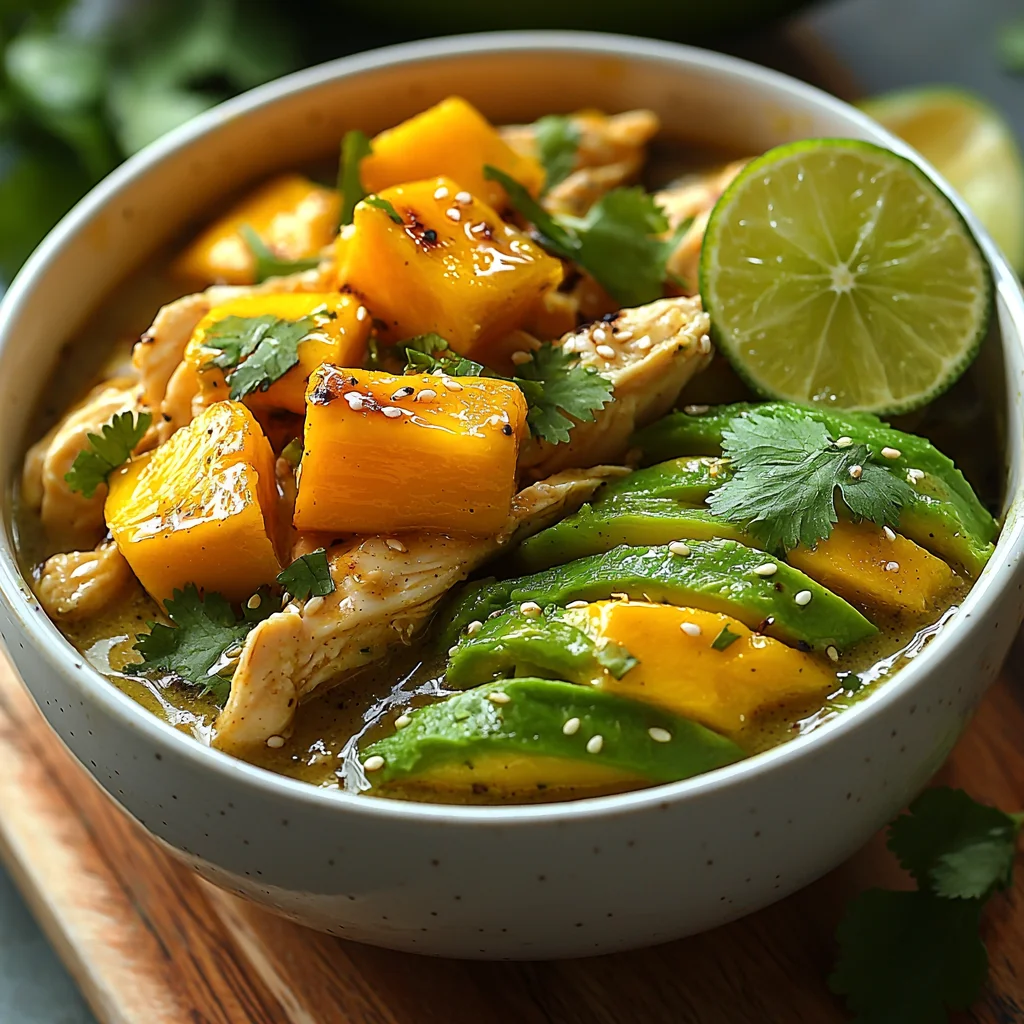
Mango Avocado Chicken Salad
Ingredients
Method
- Season chicken breasts with salt and pepper. Heat a lightly oiled skillet over medium-high heat. Cook chicken for 6-8 minutes per side, or until cooked through (165°F).
- Remove chicken from skillet and let it rest for 10 minutes before dicing or shredding into bite-sized pieces.
- While the chicken rests, prepare the other ingredients. Dice the mango, avocado, and red onion, and chop the cilantro.
- In a small bowl, whisk together the fresh lime juice, olive oil, salt, and pepper to create the dressing.
- In a large mixing bowl, combine the cooked chicken, diced mango, diced avocado, chopped red onion, cilantro, and optional jalapeño.
- Pour the lime dressing over the salad ingredients.
- Gently toss everything together until well combined, being careful not to mash the avocado.
- Taste and adjust seasoning if necessary. Serve immediately or chill for 30 minutes to allow flavors to meld.