
5 Easy Steps to Perfect Crispy TOFU Stir Fry That Will Blow Your Mind

Have you ever bitten into a piece of tofu that’s perfectly crispy on the outside yet tender and flavorful on the inside? That’s exactly what you’ll get with this Crispy TOFU stir fry—a dish that’s become my go-to weeknight dinner. I’ll never forget the first time I nailed this recipe. My husband, who’s usually skeptical about tofu, took one bite and said, “Wow, this might be the best thing you’ve ever made.” That’s when I knew I had to share it with you.
If you’ve ever struggled with soggy or bland tofu, I’ve been there too. It took me a few tries to figure out the secrets to getting that golden, crispy texture while keeping the tofu moist inside. The good news? You don’t need fancy techniques or hours in the kitchen. In fact, this recipe comes together in just 5 simple steps.
In this article, you’ll learn how to press tofu properly, the best way to crisp it up without deep frying, and how to toss it with fresh veggies and a savory sauce that ties everything together. Whether you’re a tofu newbie or a seasoned pro, this Crispy TOFU stir fry will blow your mind. Trust me, it’s a game-changer.
What Makes Crispy TOFU Stir Fry the Ultimate Comfort Food
There’s something magical about biting into crispy tofu stir fry—the crunch gives way to a soft, pillowy center, and the savory sauce clings to every nook. If you enjoyed this, you might also like Chinese Style Mango Chicken Stir Fry. It’s the kind of dish that turns tofu skeptics into believers, just like it did with my husband. Unlike regular tofu dishes that can taste bland or mushy, this version has texture contrast that makes it irresistible. The secret? A golden cornstarch coating that transforms humble tofu into something extraordinary.
The Science Behind Crispy Tofu Coating
I used to wonder why my tofu never got as crispy as the takeout versions—until I discovered cornstarch. When you dust tofu with it before pan-frying, the starch absorbs moisture and creates a delicate, crackly crust. It’s like giving tofu a tiny suit of armor. Plus, cornstarch prevents the tofu from sticking to the pan, so you get even browning without frustration. Pro tip: Don’t skip pressing the tofu first! Removing excess water is key to that perfect crispy tofu recipe texture.
Nutritional Benefits of Tofu Stir Fry
Tofu isn’t just a blank canvas—it’s packed with plant-based protein and absorbs flavors like a dream. Stir-frying it with veggies means you’re getting fiber, vitamins, and a satisfying meal without heaviness. I love that this dish feels indulgent but is actually light. And because you control the oil and sauce, it’s way healthier than most restaurant versions. My favorite combo? Bell peppers, broccoli, and a tofu stir fry sauce with garlic, ginger, and a splash of maple syrup for balance.
Restaurant vs Home Cooking Techniques
Takeout crispy tofu stir fry often arrives greasy or unevenly cooked. At home, you can perfect it. I use medium-high heat and a nonstick pan to get that crunch without deep-frying. Restaurants might drown the dish in sauce, but I prefer tossing mine lightly so the tofu stays crisp. Bonus: Homemade means you can tweak the spice level or add extra veggies. Once you master this method, you’ll never crave the takeout version again!
Essential Ingredients for Restaurant Quality Crispy Tofu Stir Fry
Now that you know why this dish rocks, let’s gather everything you’ll need, Getting restaurant-quality results at home starts with choosing the right ingredients. If you enjoyed this, you might also like Chicken Zucchini Stir Fry. I’ve learned that quality matters more than quantity when it comes to crispy tofu stir fry. After countless kitchen experiments, I’ve discovered which ingredients make the biggest difference in texture and flavor. You don’t need fancy or expensive items, but knowing what to look for transforms an ordinary dish into something spectacular.
Choosing the Right Tofu Type
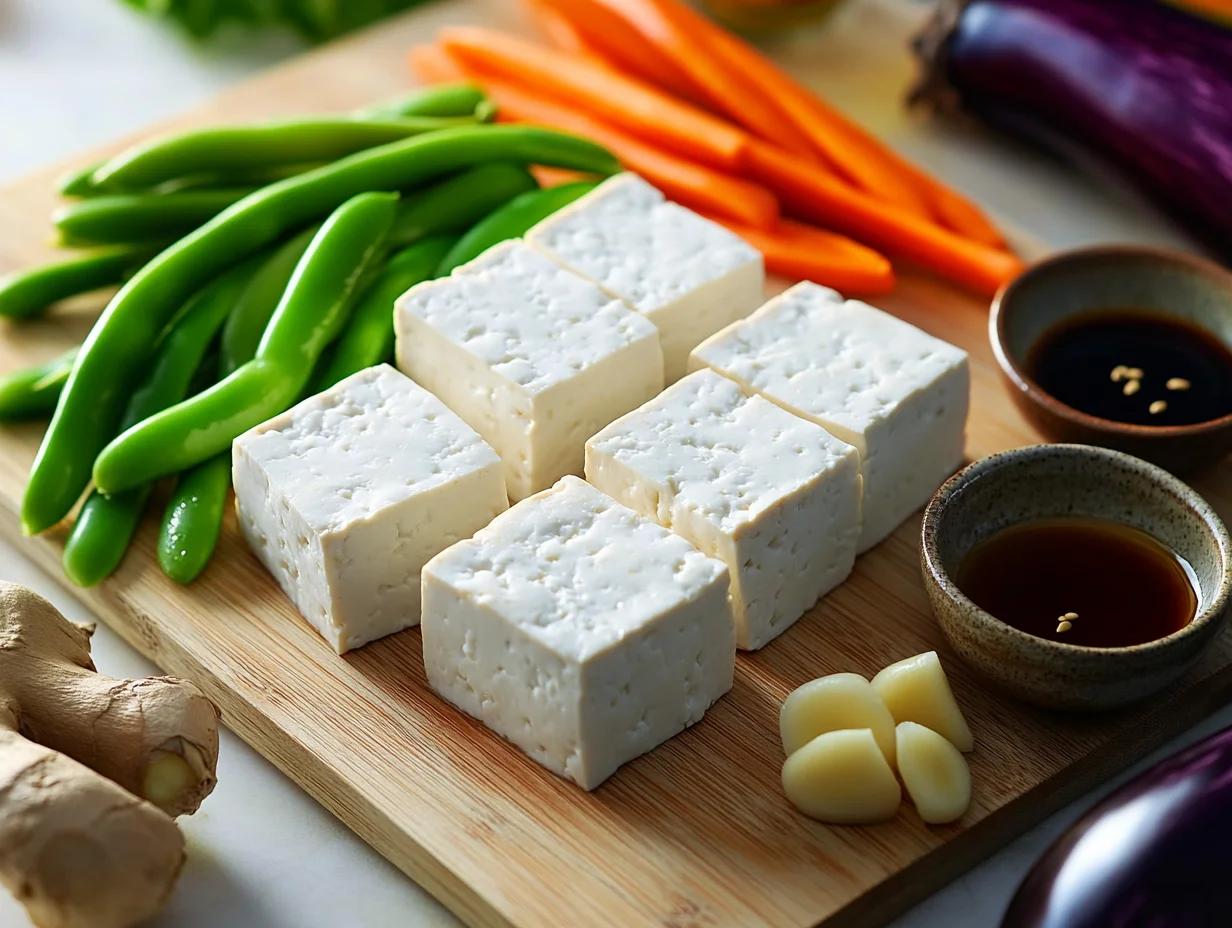
Extra-firm tofu is my go-to choice for stir-frying because it holds its shape beautifully. I always press it for at least 15 minutes to remove excess water—this step makes all the difference for achieving that golden, crispy exterior. Firm tofu works too, but it requires gentler handling and longer pressing time. I’ve tried silken tofu once for stir-fry, and let’s just say it turned into scrambled tofu soup! Now I save silken varieties for smoothies and desserts. When shopping, I check the expiration date and choose packages that feel solid when gently squeezed. Fresh tofu has a clean, slightly sweet smell and bright white color.
Sauce Components That Create Flavor Depth
My tofu stir fry sauce combines soy sauce, rice vinegar, and a touch of maple syrup for balance. I always include fresh ginger and garlic because they add incredible aromatic depth that dried versions can’t match. Sesame oil goes in at the end to preserve its nutty flavor, while cornstarch mixed with water creates that glossy, restaurant-style coating. I’ve experimented with sriracha, hoisin sauce, and even orange juice for different flavor profiles. The key is balancing salty, sweet, and acidic elements so each bite has complexity without overwhelming the tofu’s natural taste.
Vegetable Selection and Preparation
I choose vegetables with different textures and cooking times to create visual appeal and varied mouthfeel. Bell peppers, snap peas, and broccoli are my favorites because they stay crisp-tender and complement tofu perfectly. I cut everything into similar-sized pieces so they cook evenly—usually bite-sized chunks that work well with chopsticks. Onions and carrots add sweetness, while mushrooms contribute an earthy, umami flavor that makes the dish more satisfying. I prep all vegetables before starting because stir-frying happens fast, and you can’t pause mid-cooking to chop more ingredients.
Step by Step Crispy Tofu Stir Fry Cooking Method
Preparing Tofu for Maximum Crispiness
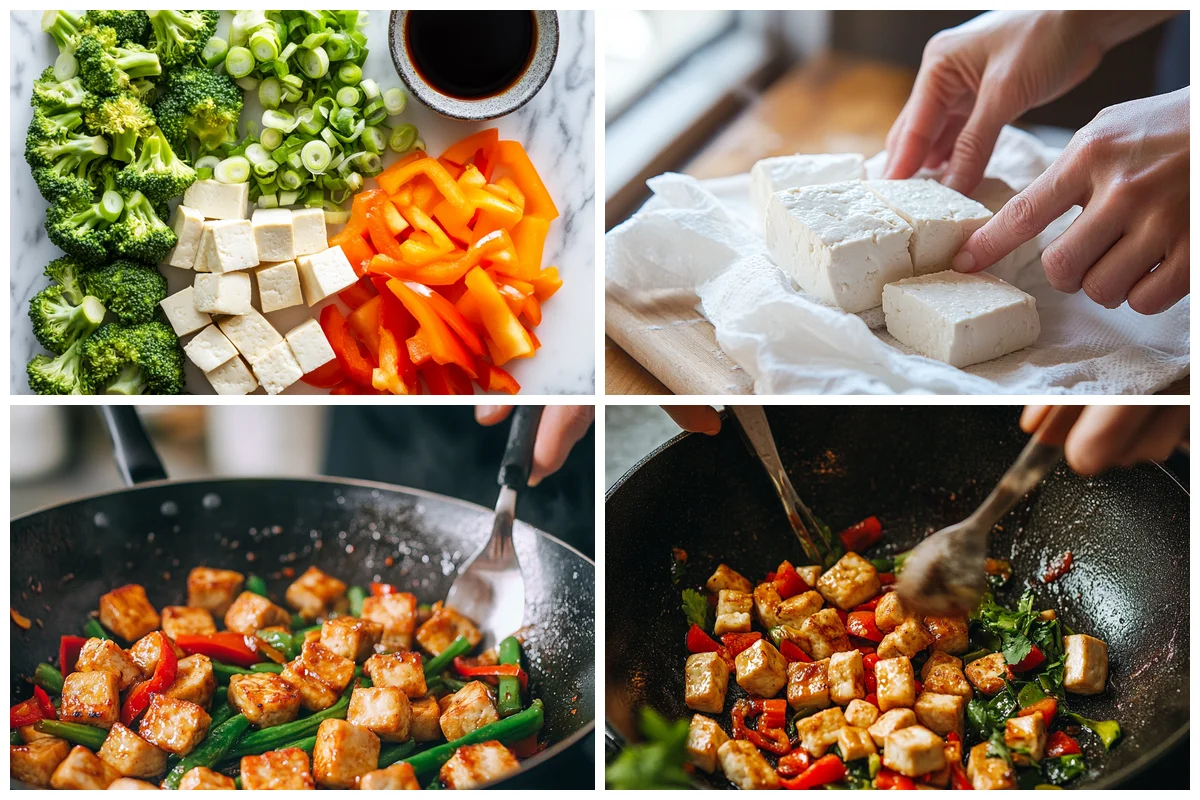
With your ingredients ready, I’ll walk you through my foolproof cooking method, First, I press my tofu for at least 30 minutes using paper towels and a heavy plate—this removes excess moisture that prevents browning. If you enjoyed this, you might also like Sausage And Cabbage Stir Fry. Then I cut the block into 1-inch cubes and toss them in cornstarch mixed with a pinch of salt.
The cornstarch coating is my secret weapon for achieving that golden, restaurant-quality exterior. I make sure every piece gets evenly coated because any bare spots won’t crisp up properly. Actually, I’ve learned that patting the cubes dry again after cutting makes the cornstarch stick better. This extra step transforms ordinary tofu into crispy golden nuggets that hold their texture even after adding sauce. For more information, see Chinese Cooking Basics.
High Heat Cooking Technique
Now I heat my wok or large skillet over medium-high heat until it’s smoking hot—this is crucial for proper searing. I add neutral oil like vegetable or peanut oil because it won’t burn at high temperatures. Next, I carefully place tofu cubes in a single layer without overcrowding the pan. The sizzling sound tells me the temperature is perfect. I resist the urge to move them for 3-4 minutes, letting each side develop that beautiful golden crust. Actually, I learned this patience the hard way after ruining countless batches by flipping too early. The tofu releases naturally when it’s ready to turn. For more information, see Japanese Cooking Basics.
Sauce Addition and Final Assembly
So after removing the crispy tofu, I quickly stir-fry my vegetables in the same pan to pick up those flavorful brown bits. Then I return the tofu and pour my prepared sauce around the edges of the pan—never directly on the tofu to preserve crispiness. I toss everything gently for just 30 seconds, letting the sauce coat evenly without making the tofu soggy. Finally, I garnish with sesame seeds and green onions for extra flavor and visual appeal. For more information, see Serious Eats Asian Recipes.
Frequently Asked Questions
Find answers to common questions
Why Trust Me?
Before we wrap up, here’s why I’m passionate about sharing this recipe, I’ve been perfecting my Crispy Tofu Stir Fry recipe for the past 5 years, making it nearly every week for my family. I learned the hard way that pressing the tofu too long makes it dry, but just 15 minutes under a weighted plate gives it the perfect texture. My sister, who used to hate tofu, now requests this dish every time she visits—it’s that good. Trust me, I’ve got this one down to a science.
Final Thoughts
This crispy tofu stir fry has become a staple in my kitchen because it’s quick, versatile, and packed with flavor. I love how the tofu gets perfectly crispy on the outside while staying tender inside, and the stir fry sauce ties everything together beautifully. Plus, it’s a great way to use up whatever veggies you have on hand—I’ve thrown in everything from broccoli to bell peppers, and it always works.
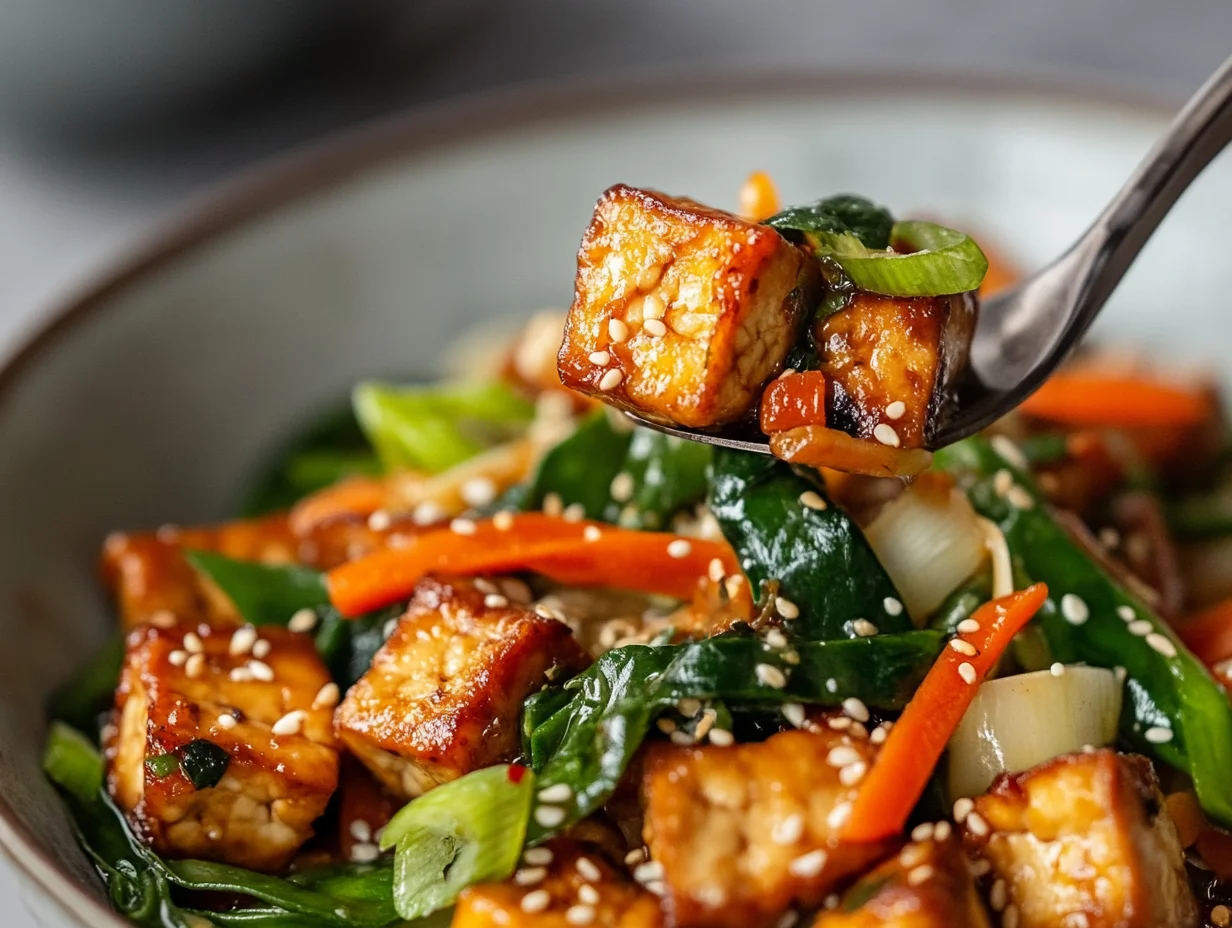
This recipe holds a special place in my heart because it’s one of the first dishes I mastered when I started cooking plant-based meals. It’s proof that healthy eating doesn’t have to be boring or complicated.
If you’re looking for a satisfying, flavorful meal that comes together in under 30 minutes, give this recipe a try! I’d love to hear how it turns out for you—leave a comment below and let me know your favorite veggie combo. What’s your go-to stir fry ingredient?
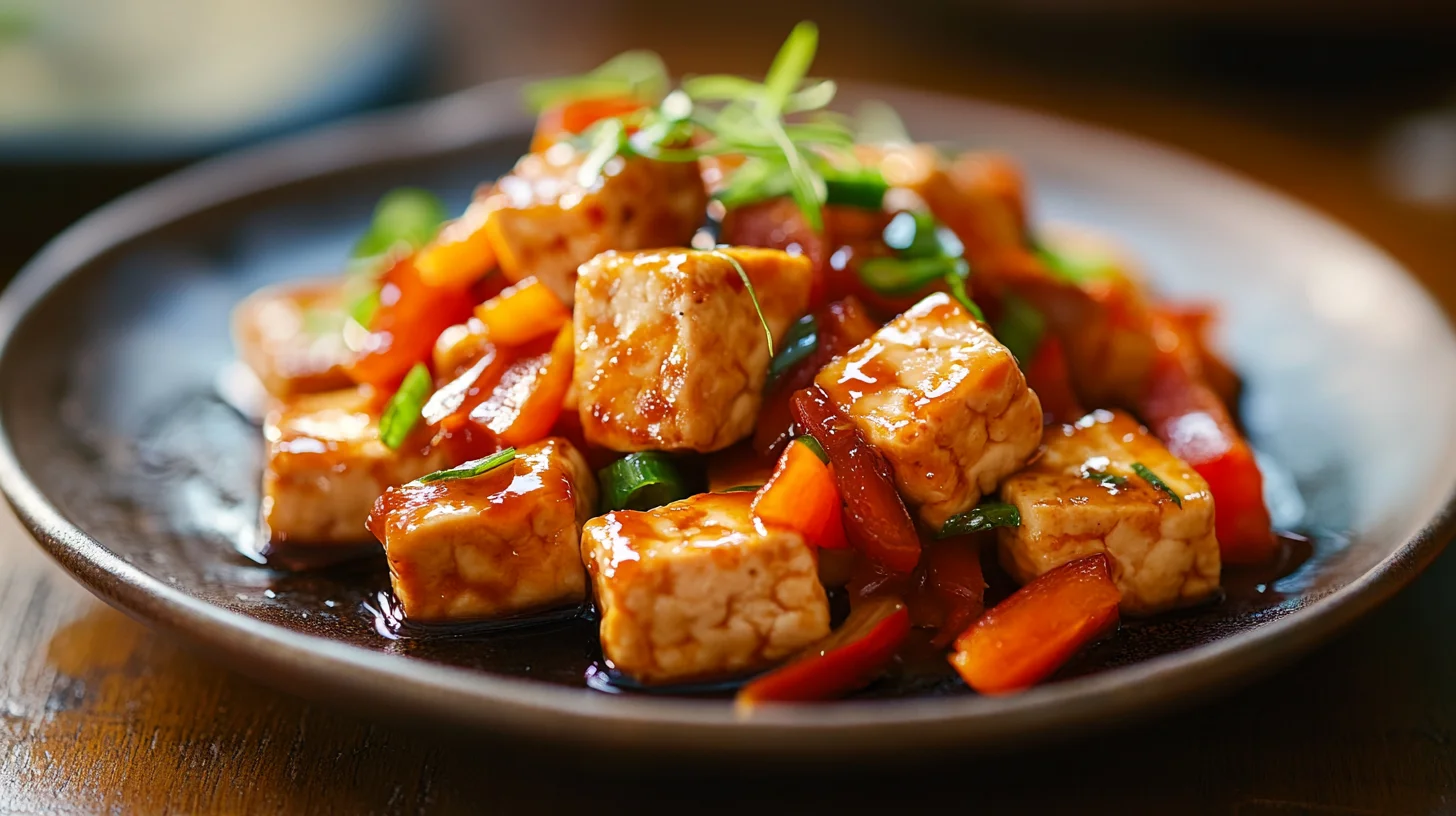
Crispy Tofu Stir Fry
Ingredients
Method
- Step 1: Press tofu for 10 minutes between paper towels with a heavy pan on top to remove excess moisture.
- Step 2: Cut tofu into 1-inch cubes and toss with cornstarch until evenly coated.
- Step 3: Heat oil in a large skillet over medium-high heat. Add tofu and cook 5-7 minutes until golden and crispy on all sides. Remove and set aside.
- Step 4: In the same pan, add bell pepper, broccoli, and carrot. Stir fry for 3-4 minutes until slightly tender.
- Step 5: Push veggies to one side, add garlic and cook 30 seconds until fragrant.
- Step 6: Return tofu to pan. Add soy sauce, maple syrup, sesame oil, and red pepper flakes. Toss everything together for 1-2 minutes until well coated.
- Step 7: Garnish with green onions and serve immediately over rice or noodles.
Notes