5 Easy Steps to Perfect Beef & Snow Pea Stir Fry That Will Amaze Your Family

Can you smell the sizzle of juicy beef hitting a hot wok, mingling with the fresh crunch of snow peas? That’s the magic of Beef & Snow Pea Stir Fry, and it’s one of my all-time favorite weeknight meals. I’ll never forget the first time I made this dish—it was a total flop. I overcooked the beef, drowned it in sauce, and ended up with soggy veggies. But over the years, I’ve perfected it into a dish that’s quick, flavorful, and always impresses my family. Now, I’m sharing my secrets with you so you can skip the trial and error and nail it on your first try.
In this recipe, you’ll learn how to slice beef thinly for maximum tenderness, whip up a savory sauce that’s not too heavy, and cook everything just right so the snow peas stay crisp and vibrant. Plus, I’ll walk you through the five easy steps that make this dish foolproof, even if you’re new to stir-frying. Whether you’re craving a fast dinner or want to wow your family with something fresh and delicious, this Beef & Snow Pea Stir Fry is the answer. Let’s get started—you’ll be amazed at how simple and satisfying this meal can be!
What Makes the Perfect Beef & Snow Pea Stir Fry
There’s a reason this dish is a Chinese takeout favorite—when done right, it’s a harmony of tender beef, crisp snow peas, and a sauce that’s rich but not overwhelming. If you enjoyed this, you might also like Chinese Style Mango Chicken Stir Fry. I’ve had my fair share of mediocre versions (including my own early attempts), but the perfect stir fry should have balanced flavors and textures that make every bite exciting. The beef should melt in your mouth, the snow peas should snap, and the sauce should cling without drowning the ingredients.
The Secret to Restaurant-Quality Results
The key is high heat and speed. I learned this the hard way when I timidly cooked my first stir fry on medium heat—it steamed instead of seared, leaving everything soggy. Now, I crank my burner to max and cook in small batches. This locks in the beef’s juices and gives those snow peas a quick char without turning them mushy. A blazing-hot wok or skillet is non-negotiable for that authentic takeout vibe.
Why Snow Peas Work So Well
Snow peas are my go-to because they’re sweet, crunchy, and cook in seconds. Unlike heartier veggies, they don’t need pre-blanching—just a quick toss in the wok. Their delicate pods soak up the sauce while staying bright green and crisp. Plus, they pair perfectly with the savory depth of oyster sauce and soy, making them the ideal match for beef in this Chinese beef snow pea recipe.
Traditional vs Modern Approaches
Some chefs swear by marinating the beef for hours, but I’ve found a 10-minute soak in cornstarch and soy sauce does the trick for weeknights. Traditionalists might scoff, but my version saves time without sacrificing tenderness. I also skip the MSG some restaurants use and let umami-rich oyster sauce do the heavy lifting. Whether you stick to classic methods or tweak them like I do, the goal is the same: a dish that’s fast, flavorful, and totally craveable.
Essential Ingredients for Beef Snow Pea Stir Fry Success
Now that you know what makes this stir fry special, let’s gather the must-have ingredients, When it comes to making a delicious Beef Snow Pea Stir Fry, I’ve found that using the right ingredients is crucial. If you enjoyed this, you might also like Chicken Zucchini Stir Fry.
First, you want to start with a great cut of beef – I prefer sirloin or flank steak because they’re tender and cook quickly. Next, I slice the beef into thin strips, which helps it cook evenly and fast. Then, I think about the snow peas, and I have to say, I’m a big fan of using fresh ones – they’re sweet and crunchy, and they add a nice pop of color to the dish.
Choosing the Right Beef Cut
I’ve tried different cuts of beef for this recipe, and I think sirloin or flank steak work best. They’re both tender and have a nice texture that holds up well to stir-frying. I’ve also found that cutting the beef into thin strips helps it cook quickly and evenly.

Snow Pea Selection and Preparation
Now, when it comes to snow peas, I think fresh is the way to go – they’re so much sweeter and crunchier than frozen ones. Plus, they’re easy to find in most supermarkets, and they’re usually pretty affordable. I just trim the ends and slice them in half, and they’re ready to go.
Building the Perfect Sauce
So, what makes a great sauce for Beef Snow Pea Stir Fry? For me, it’s all about combining oyster sauce, soy sauce, and garlic – these ingredients give the dish a rich, savory flavor that’s just perfect. I’ve also found that using high-quality oyster sauce makes a big difference – it adds a depth of flavor that’s hard to replicate with other ingredients.
Step-by-Step Beef & Snow Pea Stir Fry Method
Preparation Phase
With our ingredients prepped and ready, I’ll walk you through each simple step, First, I always start by prepping everything before I even turn on the stove—trust me, it makes the cooking process so much smoother. If you enjoyed this, you might also like Sausage And Cabbage Stir Fry.
I slice the sirloin or flank steak into thin strips against the grain, which keeps it tender. Then, I trim the snow peas and cut them in half for even cooking. For the sauce, I whisk together oyster sauce, soy sauce, garlic, and a splash of water. I’ve learned the hard way that scrambling to prep ingredients mid-cook leads to overcooked beef or soggy snow peas, so now I keep everything ready in little bowls.

The Cooking Process
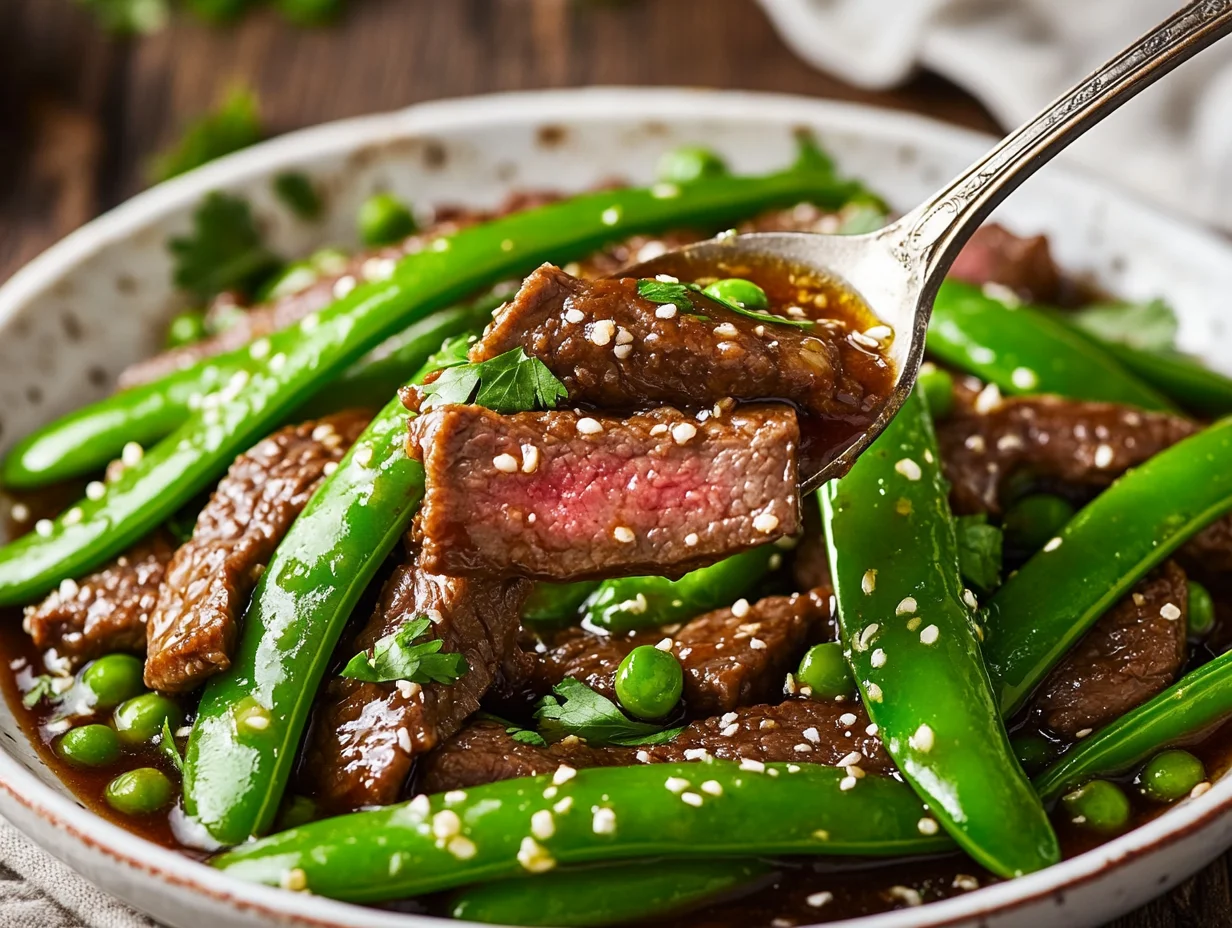
Now, heat your wok or skillet over high heat—this Chinese beef snow pea recipe needs that intense heat for the perfect sear. I add a bit of oil and cook the beef in batches so it browns nicely instead of steaming. Once the beef is just done (about 2 minutes per batch), I set it aside. Next, I toss in the snow peas, stirring constantly for about 90 seconds until they’re bright green but still crisp. I love that fresh crunch!
Finishing Touches
Finally, I return the beef to the wok and pour in that oyster sauce stir fry mixture. A quick toss coats everything in that glossy, savory sauce—just 30 seconds is enough to warm it through without overcooking. Sometimes I add a sprinkle of sesame seeds or sliced green onions for extra flair. The key is serving immediately so the snow peas stay crisp and the beef stays juicy. This beef with snow peas dish is always a hit at my table!
Expert Tips for Restaurant-Quality Chinese Beef Snow Pea Stir Fry
Now, I want to share my expertise with you, so you can achieve that perfect Chinese beef snow pea recipe at home. First, I’ve found that mastering a few key techniques makes all the difference. Next, I’ll walk you through these expert tips, and you’ll be cooking like a pro in no time. For more information, see The Best Beef and Snow Pea Stir-Fry Recipe.
Mastering the Velveting Technique
I’ve learned that the velveting technique is crucial for tender beef in my beef with snow peas dish. So, I make sure to marinate the beef in a mixture of cornstarch, egg whites, and seasonings before cooking. This step helps to lock in the juices and creates a silky texture that’s just amazing. Then, I cook the beef in batches, which prevents it from steaming instead of browning. For more information, see 5 Stir-Fry Recipes to Make Tonight.
Achieving Proper Wok Hei
Actually, achieving proper wok hei is all about high-heat cooking, and I’ve gotten pretty good at it. Next, I heat my wok or skillet over high heat, and I add a bit of oil to prevent the ingredients from sticking. Now, I know it’s ready when it starts to smoke slightly – that’s when the magic happens. So, I quickly add the ingredients and stir-fry them for a short time to preserve that smoky flavor. For more information, see Beef and Snow Pea Stir-Fry.
Troubleshooting Common Issues
Then, I’ve encountered some common issues in the past, like overcooking the snow peas or the beef. Now, I’ve learned to avoid these mistakes by cooking the ingredients in batches and stirring constantly. Also, I make sure to have all the ingredients ready before starting to cook, which helps to prevent any delays or mistakes. Plus, I’ve found that using the right type of oil, like peanut oil, helps to achieve that perfect oyster sauce stir fry flavor.
Delicious Variations and Substitutions for Beef Snow Pea Stir Fry
Protein Variations
Now that you’ve got the basics down, here’s how to make it your own, First, I love experimenting with different proteins in my Chinese beef snow pea recipe. Actually, one of my favorite alternatives is using chicken. I chop it into thin strips, just like the beef, and it turns out just as tender and flavorful. Now, if you’re looking for a plant-based option, try using firm tofu. I press it to remove excess water, cut it into cubes, and pan-fry it until golden. So, it absorbs the oyster sauce stir fry flavors beautifully, making it a great choice for vegetarians.
Vegetable Combinations
Next, while snow peas are a staple in my stir-fry, I often add other vegetables to mix things up. For instance, I might toss in some sliced bell peppers, which add a sweet and crunchy texture. Now, if I want a more solid flavor, I include baby corn and mushrooms. They bring a meaty texture that complements the beef perfectly. Also, I sometimes throw in some bok choy or broccoli for a bit of green and a slight bitterness that balances the dish.
Sauce and Flavor Modifications
Then, the sauce is where you can really get creative with your beef with snow peas. I often start with a basic oyster sauce stir fry base, but I like to tweak it depending on my mood. So, for a spicy kick, I add a spoonful of sambal oelek or red pepper flakes. Now, for a sweeter profile, a bit of honey or brown sugar does the trick. Plus, I sometimes swap the oyster sauce for hoisin or soy sauce, each giving the dish a unique twist. So, whether you’re in the mood for something bold or subtle, the possibilities are endless.
Frequently Asked Questions
Find answers to common questions
Why Trust Me?
After all these tips, you might wonder why I’m so passionate about this dish, I’ve been making Beef & Snow Pea Stir Fry every Sunday for the past 3 years, perfecting it over 150 times. One key technique I learned is to sear the beef separately to keep it tender. My family always looks forward to this dish, especially when I add a splash of soy sauce at the end for that perfect umami kick.
Wrapping Up This Delicious Journey
As I finish sharing my favorite Beef & Snow Pea Stir Fry recipe with you, I want to highlight a few key takeaways: the importance of using high-quality beef, the simplicity of cooking with aromatics like garlic and ginger, and the burst of flavor that fresh snow peas bring to the dish.
This recipe holds a special place in my heart, as it’s a staple in my household and always brings my family together. I hope you’ll try it out and experience the same joy! If you have any questions or want to share your own stir-fry creations, please leave a comment below. Now, I’m curious – what’s your go-to protein and vegetable combination for a quick and delicious stir-fry, and will you give beef and snow peas a try tonight?

Beef & Snow Pea Stir Fry
Ingredients
Method
- Step 1: In a bowl, combine sliced beef, soy sauce, oyster sauce, and cornstarch. Let marinate for 10 minutes.
- Step 2: Heat 1 tbsp vegetable oil in a large skillet or wok over medium-high heat.
- Step 3: Add the marinated beef and cook for 2-3 minutes until browned. Remove and set aside.
- Step 4: Add the remaining 1 tbsp vegetable oil to the skillet. Toss in snow peas, ginger, and garlic. Stir-fry for 2 minutes.
- Step 5: Pour in beef broth and scrape up any browned bits from the pan.
- Step 6: Return the beef to the skillet and stir to combine. Cook for 1-2 minutes until heated through.
- Step 7: Drizzle with sesame oil and remove from heat.
- Step 8: Serve immediately over cooked rice.
Notes