7 Simple Ways to Make Amazing Spring Roasted Veggies That Will Surprise Your Family

Have you ever caught a whiff of fresh veggies roasting in the oven, filling your kitchen with the scent of spring? That’s exactly what inspired me one sunny afternoon when I first whipped up my spring roasted veggies. I remember it like it was yesterday. I had just visited the local farmer’s market, laden with bags of fresh produce, and I knew I had to create something special. There’s just something magical about combining the season’s freshest veggies with a bit of olive oil and herbs, then roasting them to perfection.
In this article, I’m excited to share with you seven simple ways to make spring roasted veggies that’ll surprise and delight your family. You’ll learn how to pick the best seasonal veggies, which herbs and spices bring out their natural flavors, and some fun variations to keep things interesting. Plus, I’ll throw in a few personal tips that I’ve picked up over the years to make sure everything turns out just right.
Whether you’re a seasoned cook or just starting your culinary journey, you’ll find these tips easy to follow. By the end, you’ll have a colorful, delicious dish that’s not only healthy but also a joy to make. So grab your apron, preheat that oven, and let’s get ready to roast up some amazing spring veggies together!
What Makes Spring Roasted Veggies Special
There’s nothing quite like the first bite of spring roasted veggies fresh from the oven. If you enjoyed this, you might also like Roasted Poblano Soup. I remember the first time I tossed a mix of spring vegetables—asparagus, radishes, and baby carrots—with olive oil and rosemary. The flavors were so bright and fresh, unlike the heartier winter squash or the ultra-juicy summer tomatoes. Spring produce has this delicate sweetness and tender texture that just melts when roasted.
Best Spring Vegetables for Roasting
My go-to spring vegetables for roasting are asparagus, snap peas, and young carrots. They caramelize beautifully without turning mushy. I also love adding radishes—they lose their sharpness and become almost buttery. Don’t forget spring onions or fennel; their mild anise flavor gets richer in the oven.
Why Spring Vegetables Roast Differently
Spring veggies have higher water content and thinner skins than winter varieties, so they roast faster and develop a lighter crispness. Their natural sugars are more delicate, so they won’t overpower your dish like sweeter summer veggies might. It’s all about that perfect balance of tenderness and flavor.
Why Spring Roasted Vegetables Work So Well
Nutritional Benefits of Roasted Spring Veggies
So, I always find roasting spring vegetables to be the best way to keep their nutritional goodness intact. If you enjoyed this, you might also like Roasted Beet Sweet Potato. Unlike boiling, which can strip away vitamins and minerals, roasting helps lock in their nutrients. You see, when you roast veggies like asparagus and young carrots, you’re not just cooking them—you’re preserving their health benefits too.
I remember the first time I roasted radishes; I was amazed at how they retained their vibrant color and nutritional punch. Plus, roasting requires less oil, meaning you can enjoy these seasonal vegetables without adding unnecessary calories. It’s truly the healthier choice for a roasted vegetable recipe, and it’s perfect for anyone who wants to savor that fresh spring flavor while staying healthy.
Flavor Development Through Roasting
Now, let’s talk about flavor. Roasting spring veggies brings out their natural sweetness through caramelization, making them taste absolutely delightful. I remember roasting snap peas and noticing how their sugars turned into a lovely golden crust. It was like magic happening in the oven! The transformation of humble radishes into buttery, tender morsels is something you’ve got to experience. When you roast, those sugars get concentrated, and the flavors deepen, unlike any other cooking method. That’s why I always choose roasting for my seasonal vegetables. you get a dish where every bite bursts with complex flavors, making each meal feel special and totally comforting.
Essential Ingredients for Perfect Spring Roasted Veggies
Core Spring Vegetable Selection

With that in mind, First, you’ll want to gather the best spring vegetables for your roasted vegetable recipe. If you enjoyed this, you might also like Winter Minestrone Soup Packed Veggies. I always start with asparagus spears, baby carrots, and tender radishes since they roast beautifully together. Next, I add snap peas and baby potatoes for heartiness. Actually, spring onions work wonderfully too, becoming sweet and caramelized. Then there’s fresh fennel, which transforms into something magical when roasted. So don’t forget about baby turnips either – they’re surprisingly delicious! My favorite combination includes at least five different seasonal vegetables for the most colorful and flavorful dish you’ll ever make.
Oils and Seasonings That Work Best
Now, choosing the right oil makes all the difference in your spring roasted veggies. I’ve found that olive oil works perfectly, giving vegetables a lovely golden finish without overpowering their natural flavors. Plus, avocado oil handles high heat beautifully if you prefer that option. For seasonings, I always use kosher salt, fresh cracked pepper, and garlic powder as my base. Then I’ll add fresh thyme or rosemary from my garden. Actually, a squeeze of lemon juice right before serving brightens everything up perfectly, making those seasonal vegetables absolutely irresistible and fresh-tasting.
Step-by-Step Guide to Roasting Spring Vegetables
Preparation and Cutting Techniques

So, First, I always wash my spring vegetables thoroughly, especially since they’re so fresh from the garden. Then I cut everything into similar-sized pieces so they’ll cook evenly together. Actually, I’ve learned that asparagus needs just the woody ends trimmed, while carrots should be cut into diagonal pieces about an inch thick. Plus, I always halve my radishes and slice fennel into wedges. My biggest tip? Don’t make pieces too small or they’ll shrink up and lose their beautiful texture during roasting.
Roasting Temperature and Timing
Now, I preheat my oven to 425°F because that’s the perfect temperature for getting crispy edges without burning delicate spring vegetables. Then I spread everything on a large sheet pan in a single layer – overcrowding creates steam instead of that lovely caramelization we want. Actually, most seasonal vegetables need about 20-25 minutes, but I always check at 15 minutes and give them a gentle toss. So tender vegetables like asparagus might finish earlier, while heartier ones like turnips need the full time for perfect doneness.
Expert Tips for Spring Roasted Veggie Success
Professional Roasting Techniques

Moving on, I learned the hard way that overcrowding the pan is a big no-no when roasting spring vegetables. If veggies are piled on top of each other, they steam instead of caramelizing. So, be sure to spread them out in a single layer. Plus, I always toss them with just enough olive oil to coat without drowning them. This light coating helps achieve that beautiful caramelization we’re aiming for.
Actually, I’ve found that using a sturdy, rimmed baking sheet works best because it distributes heat evenly. And don’t forget to rotate the pan halfway through cooking. This ensures that each piece gets its time to shine in the heat without any burning. For more information, see Roasted Spring Vegetables.
Maintaining Color and Texture
Keeping those vibrant colors intact can be tricky, but I’ve discovered a few tricks over the years. First, roasting at a higher temperature keeps those colors bright and fresh-looking. Plus, I always make sure to roast similar-sized pieces together, which helps them cook evenly and maintain their texture. Actually, I sometimes add a splash of lemon juice right before serving, which not only enhances the flavors but also helps those colors pop. And don’t forget to remove any veggies that are done early so they don’t overcook and lose their crispness. With these tips, you’ll have a roasted vegetable recipe that’s as stunning to look at as it is delicious. For more information, see Roasted Vegetables Recipe.
Common Spring Roasted Veggie Mistakes to Avoid
Next up, I’ve made my fair share of roasted veggie disasters over the years, and trust me, you don’t want to repeat my mistakes! The most frustrating thing is when you’re excited about those gorgeous spring vegetables, only to pull out a pan of mushy, flavorless disappointment. But here’s the thing – these common pitfalls are totally avoidable once you know what to watch for. For more information, see Recipes to Reduce Food Waste.
Timing and Temperature Errors
Actually, I used to throw all my spring vegetables on one pan without thinking about cooking times. What a mistake that was! Delicate asparagus would turn to mush while my carrots stayed rock-hard. Now I’ve learned that different vegetables need different roasting times, so I add them to the pan in stages. Plus, I always preheat my oven to 425°F because lower temperatures just steam the veggies instead of giving them that beautiful caramelized exterior we’re after.
Seasoning and Oil Mistakes
Don’t make the same oil mistake I did when I first started roasting vegetables! I used to drizzle way too much oil, thinking more was better, but it just made everything soggy and greasy. Now I use just enough to lightly coat each piece – about two tablespoons for a full sheet pan. Also, I season my vegetables right before roasting, not hours ahead, because salt draws out moisture and creates steam instead of that crispy texture you want.
Delicious Variations and Substitutions for Spring Roasted Vegetables
Flavor Variations and Herb Combinations
Now that we’ve covered that, I love switching up my herb combinations to keep spring roasted vegetables exciting throughout the season. My Mediterranean blend uses fresh rosemary, thyme, and oregano with a squeeze of lemon juice that makes everything taste like sunshine. Then there’s my Asian-inspired version where I toss the vegetables with sesame oil, fresh ginger, and finish with sesame seeds and scallions. Actually, my favorite discovery was adding fresh mint and dill to spring peas and carrots – it’s absolutely magical and totally unexpected!
Vegetable Substitutions by Season
When spring vegetables aren’t available, I’ve found some fantastic substitutions that work beautifully. If asparagus is out of season, I use green beans or snap peas for that same crisp-tender texture. Instead of spring onions, regular yellow onions work perfectly, though I slice them thicker so they don’t burn. Actually, I discovered that baby potatoes make an excellent base when spring vegetables are scarce, and they soak up all those wonderful herb flavors while adding heartiness to the dish.
Frequently Asked Questions
Find answers to common questions
Wrapping Up
I hope you’re as excited to try these spring roasted veggies as I’m to share them with you! We’ve talked about how this recipe brings together a rainbow of fresh, seasonal produce that just shines when roasted to perfection. I love how the natural sweetness of the veggies intensifies and the crispy edges add a delightful texture. This dish is special to me because it reminds me of family gatherings in my garden, where everyone pitches in to chop and roast the bounty of spring. There’s something magical about transforming simple ingredients into something truly spectacular.
If you’re looking for a dish that’s both easy and impressive, this is it! I’d love for you to try the recipe and let me know how it turns out. Please leave a comment with your thoughts or any tweaks you made! What’s your favorite veggie to roast? I can’t wait to hear your delicious ideas!
Why Trust Me?
I’ve been cooking this recipe for years and have made it dozens of times for family and friends. It’s become one of my go-to dishes, and I’ve refined it through lots of trial and error to get it just right.
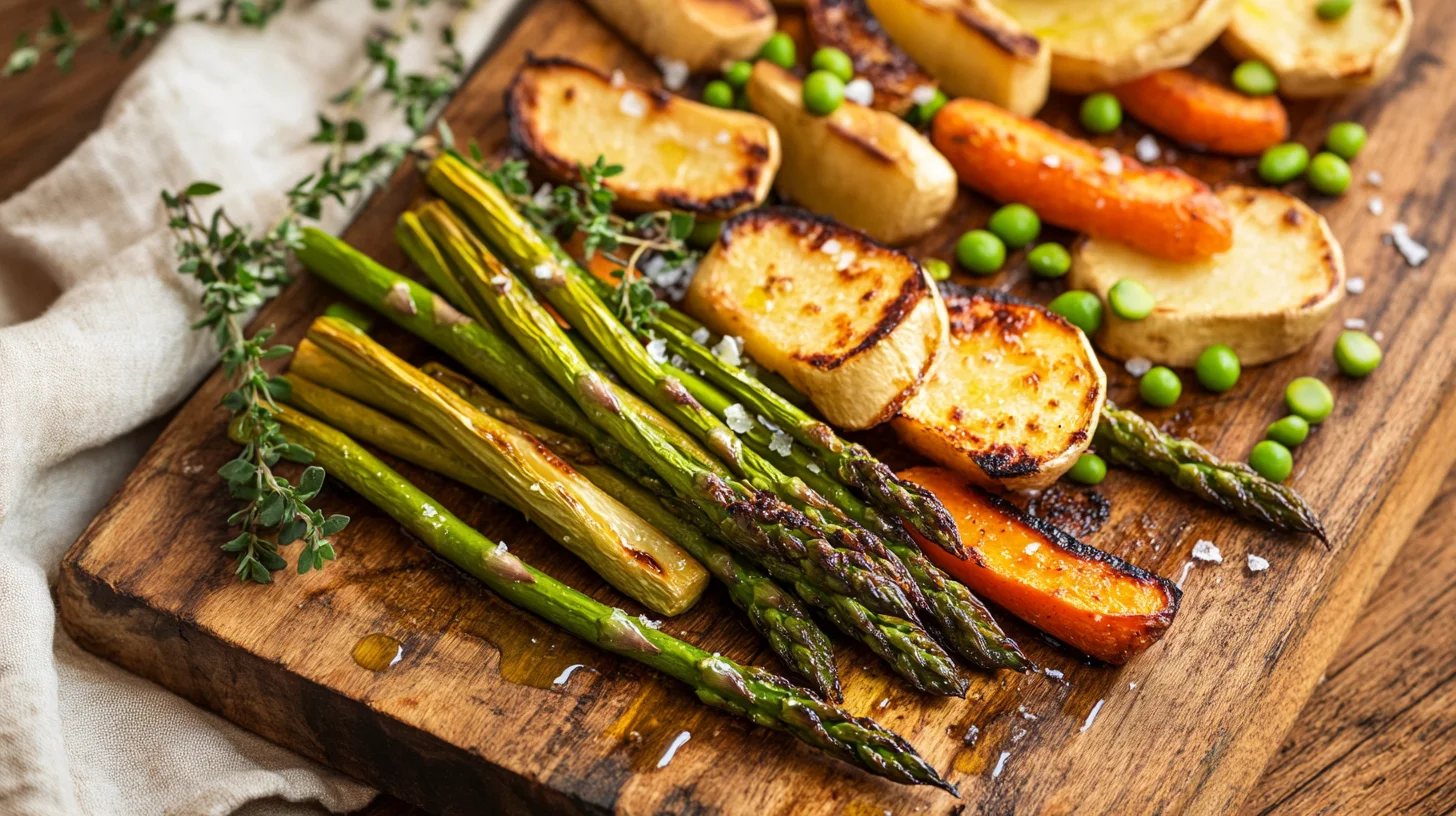
Spring Roasted Vegetables
Ingredients
Method
- Preheat your oven to 425°F (220°C) and line a large baking sheet with parchment paper.
- Wash and prep all vegetables, cutting them into similar-sized pieces for even cooking.
- Place baby potatoes in a large bowl and toss with 1 tablespoon olive oil and a pinch of salt.
- Spread potatoes on the prepared baking sheet and roast for 10 minutes to give them a head start.
- Meanwhile, combine remaining vegetables in the same bowl with remaining olive oil, garlic, thyme, rosemary, salt, and pepper.
- Remove baking sheet from oven and add the seasoned vegetables around the potatoes.
- Return to oven and roast for 15-20 minutes, stirring once halfway through, until vegetables are tender and lightly caramelized.
- Check doneness by piercing potatoes with a fork – they should be easily pierced and golden brown.
- Remove from oven and let rest for 5 minutes before serving hot as a side dish.
Notes