7 Simple Ways to Make Amazing Prime Rib with Garlic Herb Crust

Have you ever caught a whiff of a perfectly roasted prime rib wafting through the kitchen? It’s like a warm hug on a cold day. I remember the first time I made Prime Rib with Garlic Herb Crust for my family; my mom couldn’t stop raving about it. She kept asking for the recipe, and that’s when I knew I had a winner. My secret? A simple blend of garlic and herbs that creates a crust so flavorful, you’ll want to make it again and again.
In this article, I’ll share the seven simple ways to make this dish truly amazing. You’ll learn how to choose the perfect cut of meat, create a delicious herb crust, and cook it to juicy perfection. I’ll also let you in on some personal tips and tricks I’ve picked up over the years. This isn’t just about following a recipe; it’s about creating an experience that your family will love and remember.
Plus, I’ll show you how to make sure your prime rib turns out perfect every time. Whether you’ve cooked prime rib before or this is your first time trying it, I’ve got you covered. So, get ready to impress your guests and make your kitchen smell like a dream. Let’s dive into the delicious world of Prime Rib with Garlic Herb Crust together!
What Makes Prime Rib with Garlic Herb Crust Special
Understanding the Prime Cut
Prime rib isn’t just any roast beef – it’s the king of cuts! I always tell people that prime rib comes from the rib section of the cow, specifically ribs six through twelve. If you enjoyed this, you might also like Salisbury Steak Meatballs With Garlic Herb Mashed Potatoes 2. This standing rib roast has incredible marbling that keeps the meat tender and juicy. When I first learned the difference between prime rib and regular roast beef, it changed my cooking forever. The fat distribution in prime rib creates natural basting as it cooks.
The Science Behind Herb Crusts
Here’s what I’ve discovered about herb crusts – they’re not just for show! The garlic and herbs create a protective barrier that locks in moisture while adding incredible flavor. My garlic herb butter mixture penetrates the meat’s surface, creating layers of taste that go beyond the crust. The herbs also help the meat develop a beautiful color as they caramelize during cooking.
Why This Recipe Works Every Time
I’ve made this recipe countless times, and it never fails because of one simple principle – consistency. The garlic herb crust acts like a flavor shield, preventing the meat from drying out while infusing it with aromatic goodness. Plus, the reverse sear method I use creates that perfect pink interior with a gorgeous golden exterior that’ll make your guests think you’re a professional chef.
Essential Ingredients for Perfect Garlic Herb Butter Crust
With that in mind, Creating the perfect garlic herb butter crust starts with understanding how each ingredient works together. If you enjoyed this, you might also like Golden Crust Garlic Rosemary Focaccia Muffins. I’ve experimented with countless combinations over the years, and I can tell you that quality ingredients make all the difference. The butter acts as your flavor vehicle, while the herbs provide aromatic complexity that transforms a simple roast into something extraordinary.
Fresh Herb Selection Guide
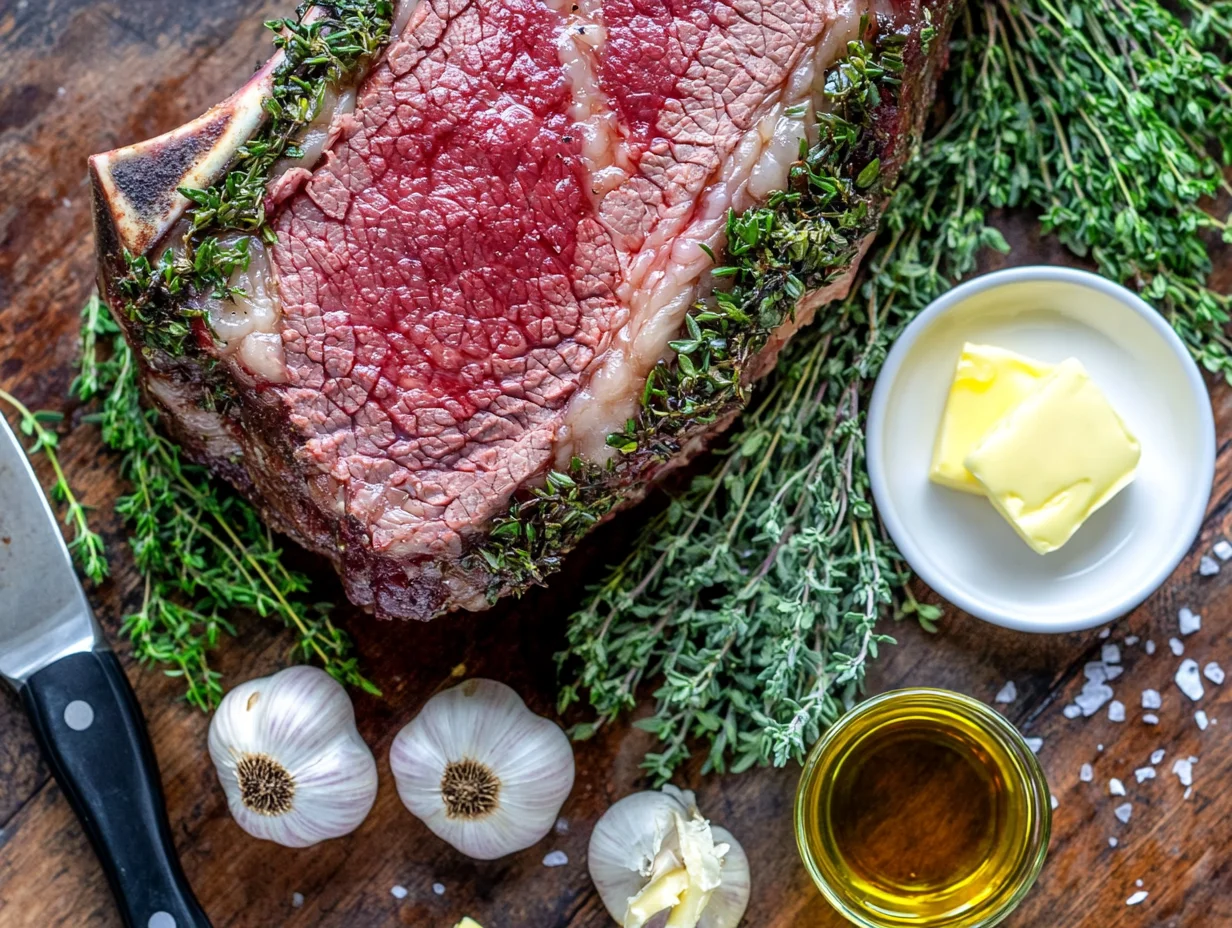
Fresh herbs absolutely transform this garlic herb butter mixture in ways dried herbs simply can’t match. I always use fresh rosemary, thyme, and parsley because they release essential oils that penetrate the meat beautifully. When fresh herbs aren’t available, I use one-third the amount of dried herbs, but honestly, the flavor impact just isn’t the same. My go-to combination includes two tablespoons of minced fresh rosemary, one tablespoon of fresh thyme leaves, and two tablespoons of chopped fresh parsley.
Garlic Preparation Secrets
The way you prepare your garlic makes a huge difference in the final flavor profile. I always use a microplane grater to create a fine garlic paste rather than just mincing it with a knife. This technique releases more of the garlic’s natural oils and creates better distribution throughout the butter. Fresh garlic cloves work best – I typically use six large cloves for a full standing rib roast.
Butter and Oil Combinations
Room temperature butter is absolutely crucial for creating a spreadable mixture that adheres properly to the meat. I combine half a cup of softened butter with two tablespoons of olive oil, which helps the mixture stay pliable and prevents burning during the reverse sear method. The oil also helps the herbs and garlic distribute evenly throughout the mixture.
Step-by-Step Prime Rib Cooking Method
Preparation and Seasoning Timeline
Now that we’ve covered that, When it comes to preparing a prime rib, timing and seasoning are key. If you enjoyed this, you might also like Garlic Herb And Cheese Bread. I like to start by patting the roast dry with paper towels, helping the seasoning stick better. After that, I generously apply my garlic herb butter mixture, making sure it covers every inch. I usually let this sit in the fridge for about 24 hours. This gives the flavors time to meld and penetrate the meat. Before roasting, remember to take the roast out of the fridge for at least an hour to come to room temperature. This step is crucial for even cooking.
Low Temperature Roasting Phase
Now, let’s talk about the low temperature roasting phase. I set my oven to a gentle 250°F, which might seem low, but trust me, it’s perfect for the reverse sear method. This slow roast allows the meat to cook evenly, ensuring that beautiful pink color from edge to edge. I use a meat thermometer to monitor the internal temperature, aiming for around 120°F. This step usually takes a few hours, but it’s worth the wait. Patience here guarantees a tender and juicy standing rib roast.
High Heat Finishing Technique
Finally, there’s the high heat finishing technique. After the low and slow roast, I pull the meat out and let it rest for about 20 minutes. Resting is crucial—it lets the juices redistribute, keeping the meat moist. Then, I crank the oven up to 500°F and pop the roast back in for 10 minutes. This blast of heat creates a beautiful crust without overcooking the interior. When you cut into that roast, you’ll see the perfect contrast: a crispy garlic herb crust surrounding a juicy, tender center.
Expert Tips for Juicy Standing Rib Roast Success
Next up, After years of perfecting my prime rib technique, I’ve learned that success comes down to mastering three crucial elements. These professional methods have saved me from countless dinner disasters and turned me into the go-to host for holiday gatherings.
Temperature Control Mastery
First, let me share my secret for perfect temperature control. I always insert my probe thermometer into the thickest part of the roast, avoiding any fat or bone contact. Actually, I’ve found that placing it at an angle works best for accurate readings. The key is monitoring that internal temperature religiously during the reverse sear method. I never trust my oven’s built-in thermometer—it’s usually off by at least ten degrees. Instead, I use a reliable digital probe that alerts me when we’re approaching that perfect 120°F mark.
Proper Resting Techniques
Now, here’s where most people mess up—they skip the resting phase entirely. I always tent my standing rib roast with foil and let it rest for exactly twenty minutes after the low-temperature phase. This resting period allows those precious juices to redistribute throughout the meat fibers. Plus, the internal temperature actually rises another five degrees during this time, which I factor into my cooking calculations. For more information, see Beef from Farm to Table.
Professional Carving Methods
Finally, my carving technique makes all the difference in presentation. I always use a sharp carving knife and cut against the grain in smooth, confident strokes. Actually, I remove the bones first, then slice the meat into perfect half-inch portions. This method keeps each slice intact and prevents those beautiful juices from running all over my cutting board. For more information, see The Perfect Prime Rib.
Common Prime Rib Seasoning Mistakes to Avoid
Next up, I’ve watched too many home cooks ruin expensive prime rib cuts with simple seasoning errors. Actually, these mistakes cost me several Christmas dinners before I learned the hard way. Now I share these lessons so you won’t make the same costly errors I did. For more information, see Cuts of Beef: A Guide to the Leanest Selections.
Seasoning Timing Errors
First, don’t season your standing rib roast just before cooking—that’s amateur hour. I always apply my garlic herb butter mixture at least four hours ahead, preferably overnight. This timing allows the salt to penetrate deep into the meat fibers, creating better flavor throughout. Plus, the herbs have time to infuse their oils into the surface, which creates that incredible aromatic crust we’re after.
Temperature Control Failures
Next, never trust your oven’s built-in thermometer when using the reverse sear method. I learned this lesson after overcooking a $200 roast because my oven ran thirty degrees hot. Also, don’t rush the low-temperature phase—patience creates tenderness. Actually, I set my probe thermometer for 115°F, knowing the temperature will climb during the final searing phase. This approach prevents that dreaded gray band around the edges.
Herb Crust Application Mistakes
Finally, avoid pressing your herb mixture too firmly onto the meat surface. I gently pat my garlic herb blend, letting it adhere naturally without compacting. Then I refrigerate uncovered for better crust formation. So many people wrap their seasoned roast, which creates steam and prevents proper crust development during the final high-heat searing phase.
Delicious Variations and Herb Crusted Roast Options
So, When I’m in the mood to mix things up, I love trying different herb combinations to give my prime rib a unique twist. For an international flair, I sometimes use a blend of rosemary, thyme, and a hint of lavender for a Provence-inspired crust. It reminds me of a trip to the French countryside, where simple yet flavorful ingredients reign supreme. Or, if I’m feeling adventurous, I’ll opt for cilantro and lime zest, which adds a fresh, tangy burst reminiscent of a Mexican fiesta. These variations keep the standing rib roast exciting and new, even if I’m using my trusty reverse sear method.
Mustard and Horseradish Crusts
Sometimes, I crave a little more zing in my prime rib, so I turn to a mustard-based crust. I mix Dijon mustard with my garlic herb butter, which gives the roast a tangy, savory depth. A friend once suggested adding horseradish to the mix, and now it’s a staple for me when I want that extra kick. The combination of spicy and savory complements the richness of the beef perfectly.
Nut and Seed Crust Additions
When I feel like experimenting with textures, I add a layer of crushed nuts or seeds to my herb crust. One time, I tried toasted pistachios mixed with breadcrumbs, and the result was a lovely, crunchy twist that everyone adored. Another favorite of mine is sesame seeds, which add a subtle nutty flavor and delightful crunch. These additions bring a new dimension to the classic garlic herb crust, making each bite an exciting experience.
Frequently Asked Questions
Find answers to common questions
Final Thoughts
This garlic herb crusted prime rib is truly a showstopper—it’s juicy, flavorful, and perfect for special occasions. The herb butter crust locks in moisture while adding a punch of garlic and fresh herbs, and the slow-roasting method ensures tender, pink perfection every time. Plus, it’s easier than you think—just a little patience and simple ingredients create something extraordinary.
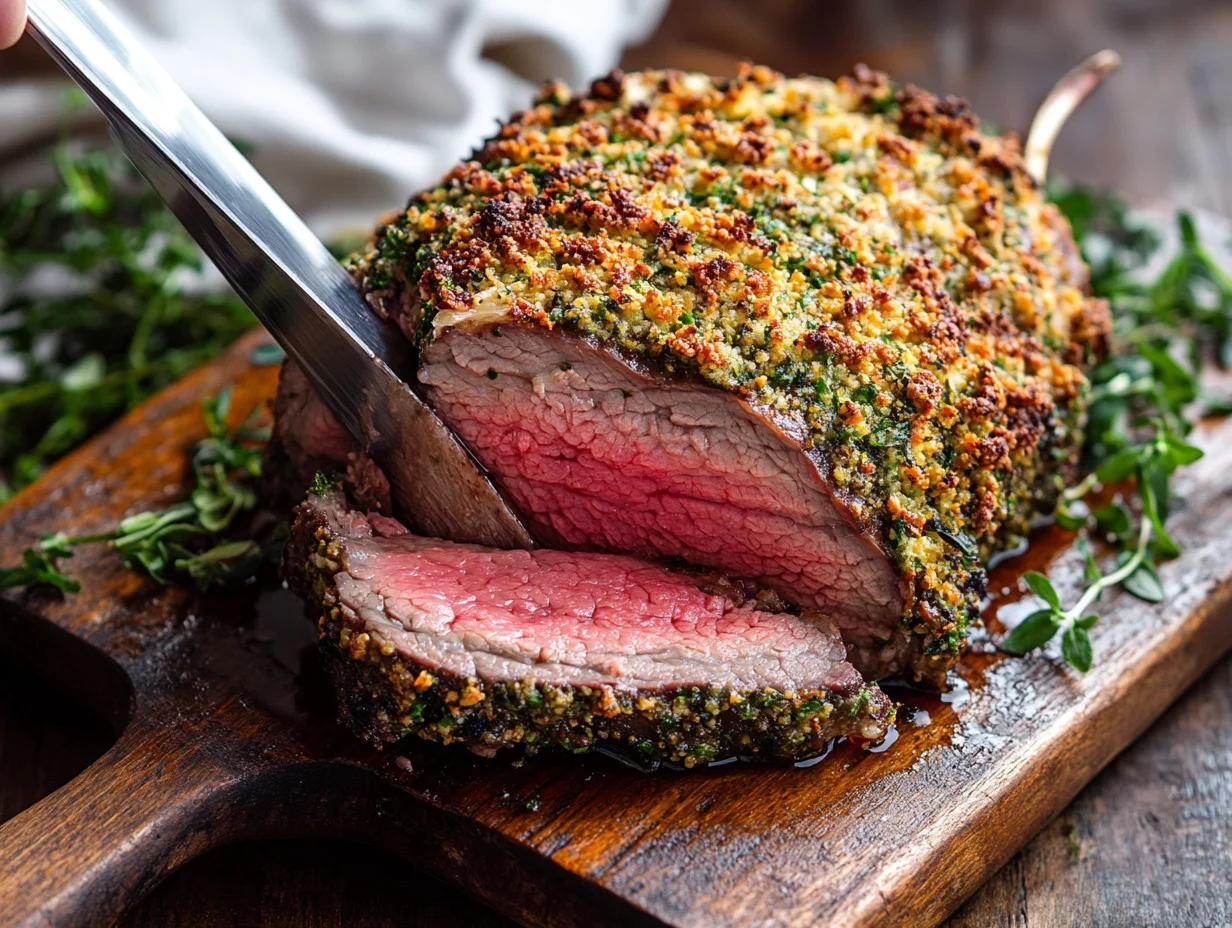
This recipe holds a special place in my heart because it’s the dish I make for holiday gatherings. Watching everyone’s faces light up when I carve into that golden crust never gets old.
Now it’s your turn! Give this recipe a try and let me know how it turns out. Did you stick with rosemary and thyme, or did you add your own twist? What’s your go-to special occasion dish? I’d love to hear your favorites in the comments! Happy cooking!
Why Trust Me?
I’ve been cooking this recipe for years and have made it dozens of times for family and friends. It’s become one of my go-to dishes, and I’ve refined it through lots of trial and error to get it just right.
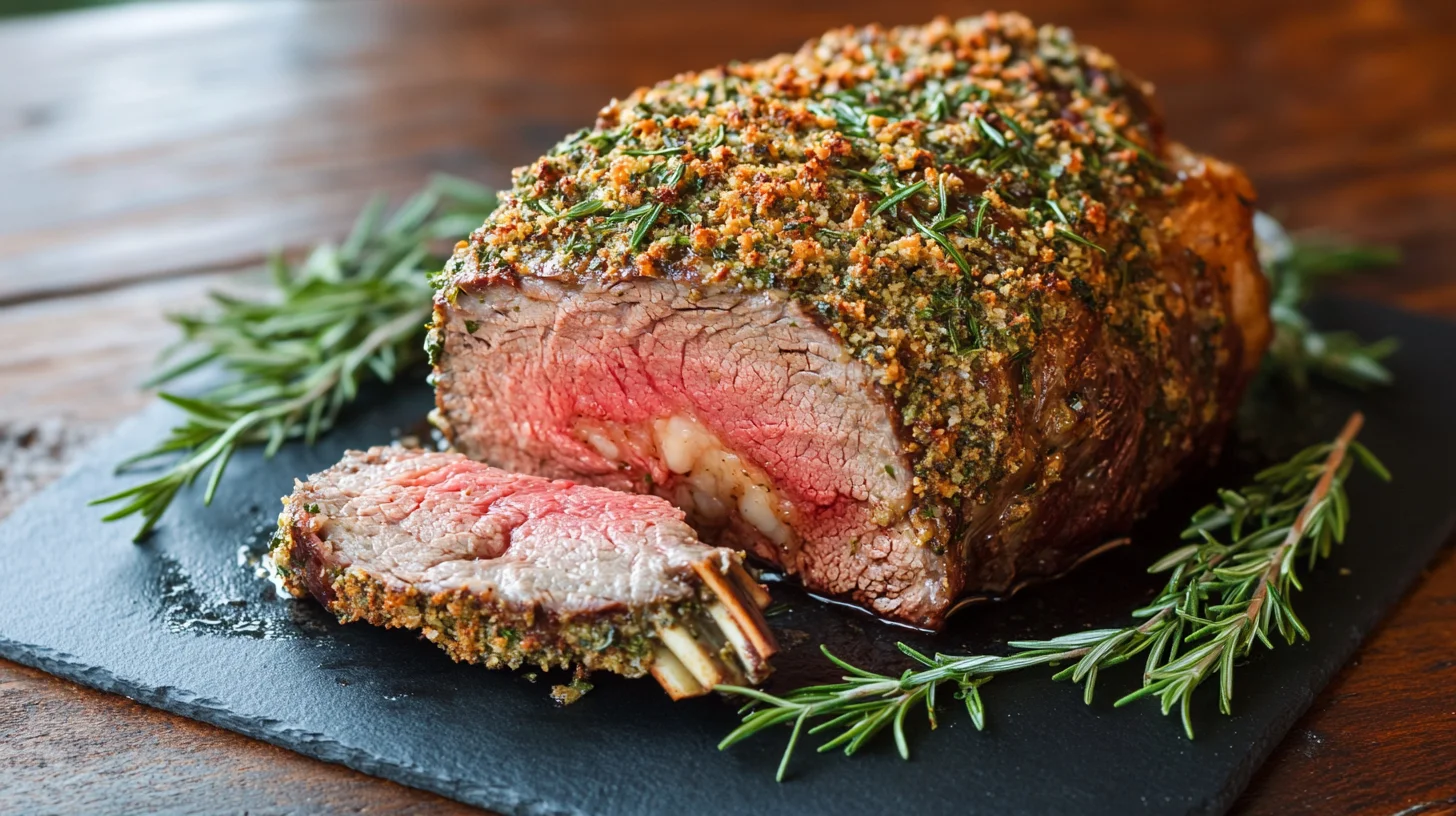
Prime Rib with Garlic Herb Crust
Ingredients
Method
- Step 1: Preheat your oven to 450°F (230°C).
- Step 2: In a small bowl, combine minced garlic, olive oil, rosemary, thyme, salt, pepper, onion powder, smoked paprika, and cayenne pepper.
- Step 3: Pat the prime rib roast dry with paper towels. Rub Dijon mustard all over the roast.
- Step 4: Evenly coat the roast with the garlic herb mixture, pressing it onto the meat.
- Step 5: Place the roast on a rack in a roasting pan, fat side up.
- Step 6: Roast in the preheated oven for 15 minutes, then reduce the temperature to 325°F (165°C).
- Step 7: Continue roasting until the internal temperature reaches 130°F (54°C) for medium-rare, about 1 hour 30 minutes.
- Step 8: Let the roast rest for 20 minutes before carving.
Notes